Key takeaways
- Water pressure is a leading cause of wall failure
- Saturated soil is much heavier than dry soil
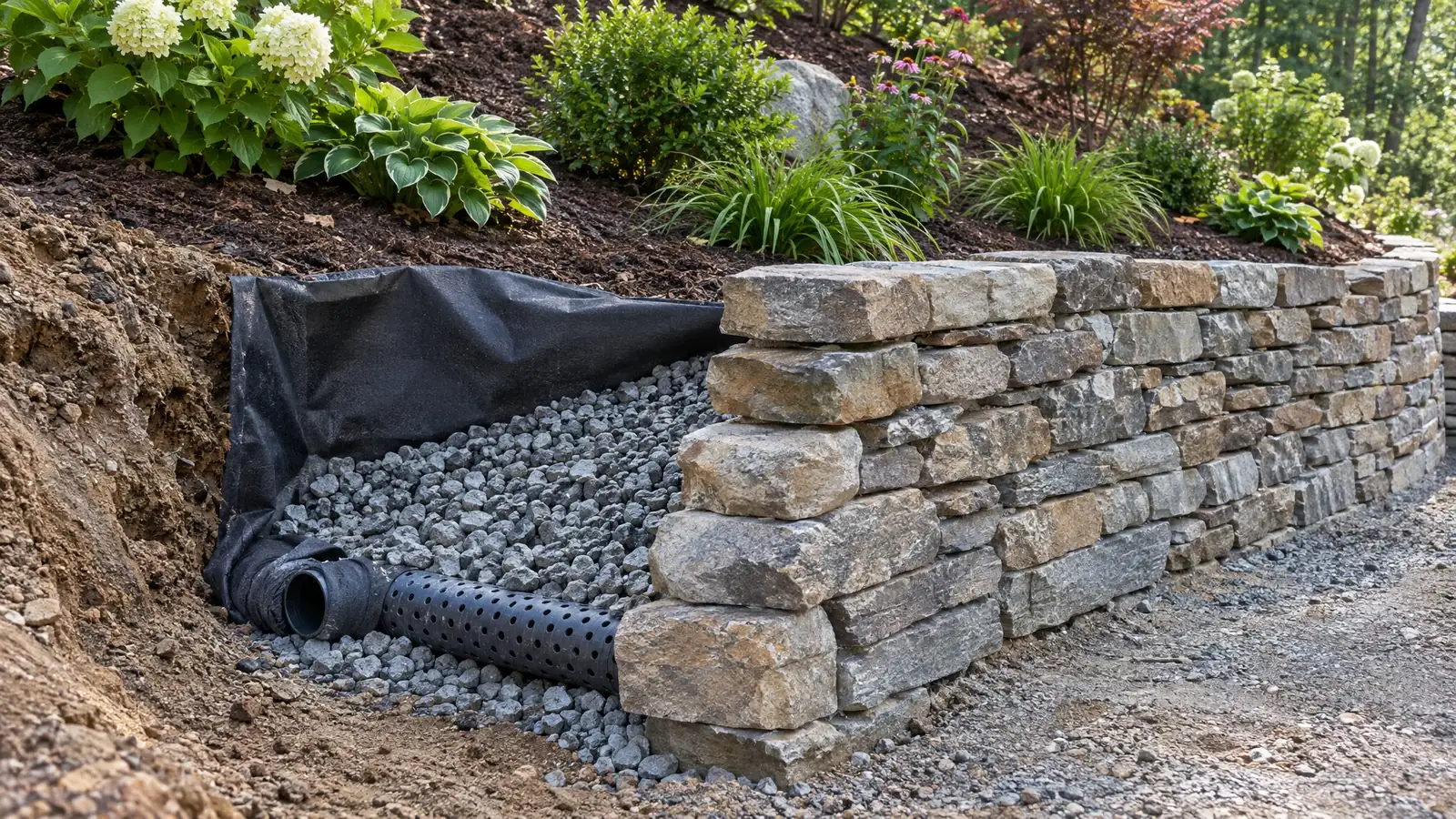
- A drain pipe in gravel behind the wall relieves pressure
- Surface water above the wall must also be managed
Water is the enemy
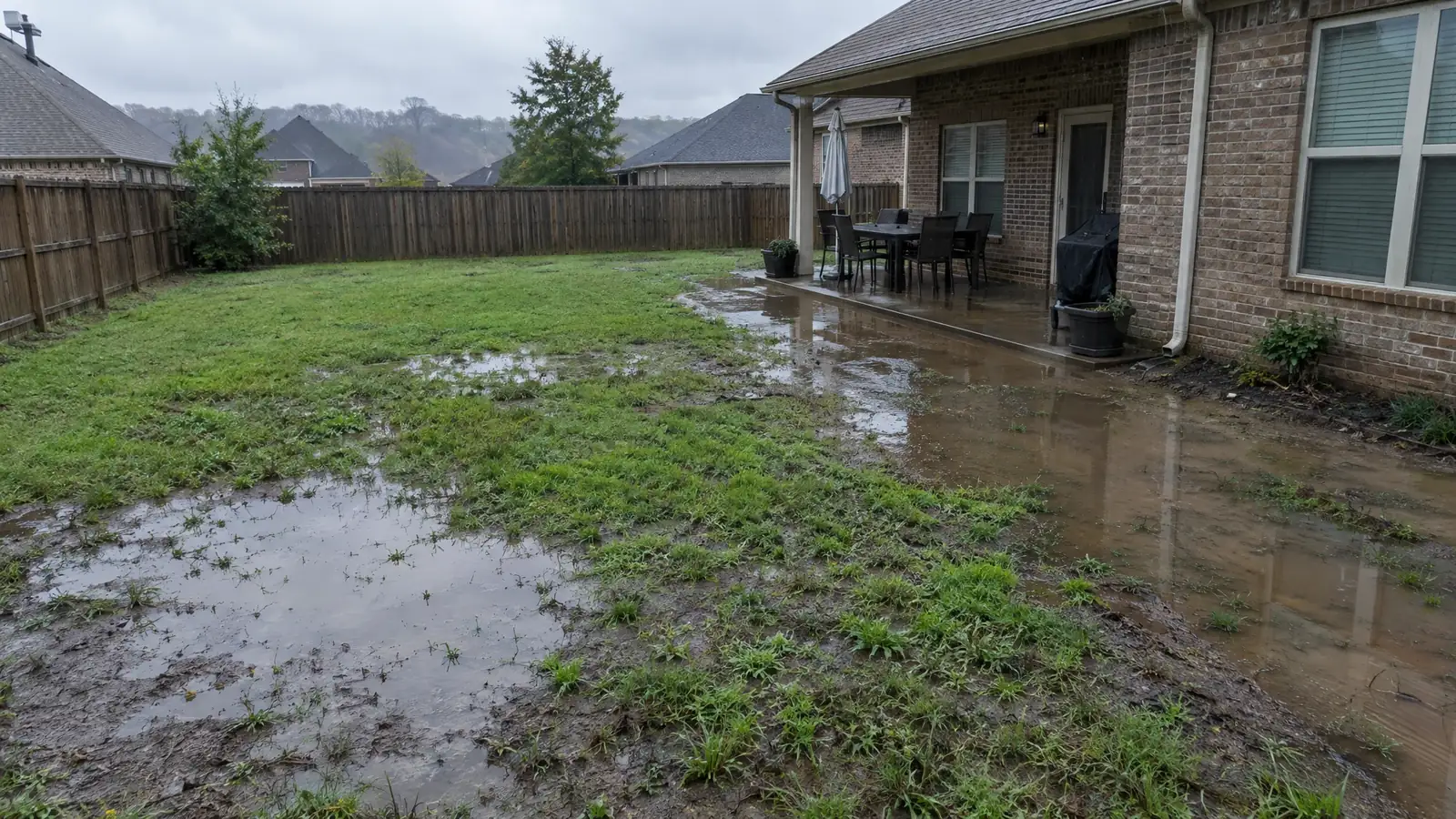
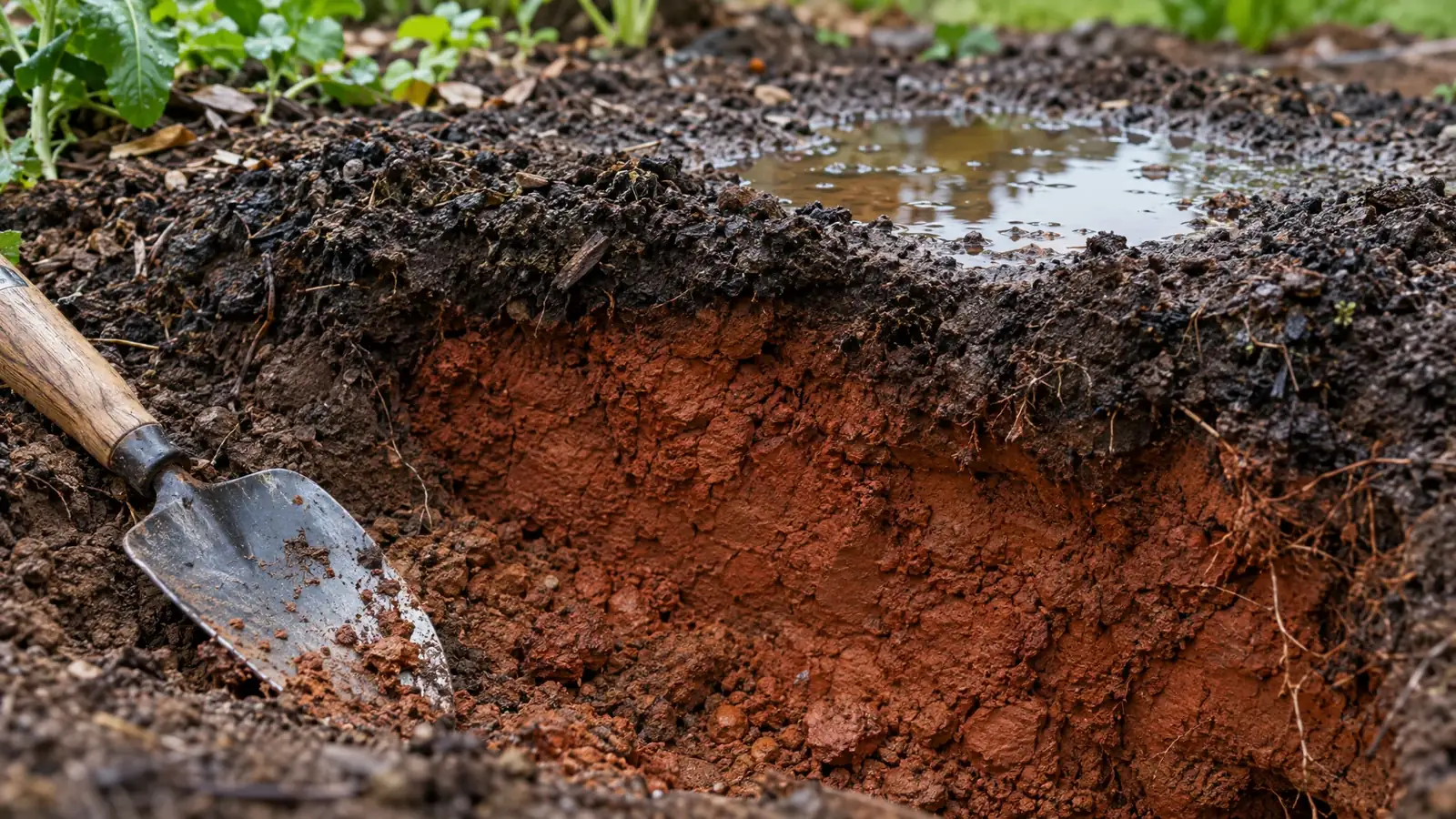
A wall must resist the soil’s push. Add water and that load can multiply. In clay, the water stays, so pressure builds over time.
The drain layer
A column of clean gravel behind the wall and a perforated pipe at its base give water a path out, so it flows to the outlet instead of loading the wall.
Weep outlets
Weep holes or a daylight outlet let the water leave. They only work if there is drainage behind them.
Surface control
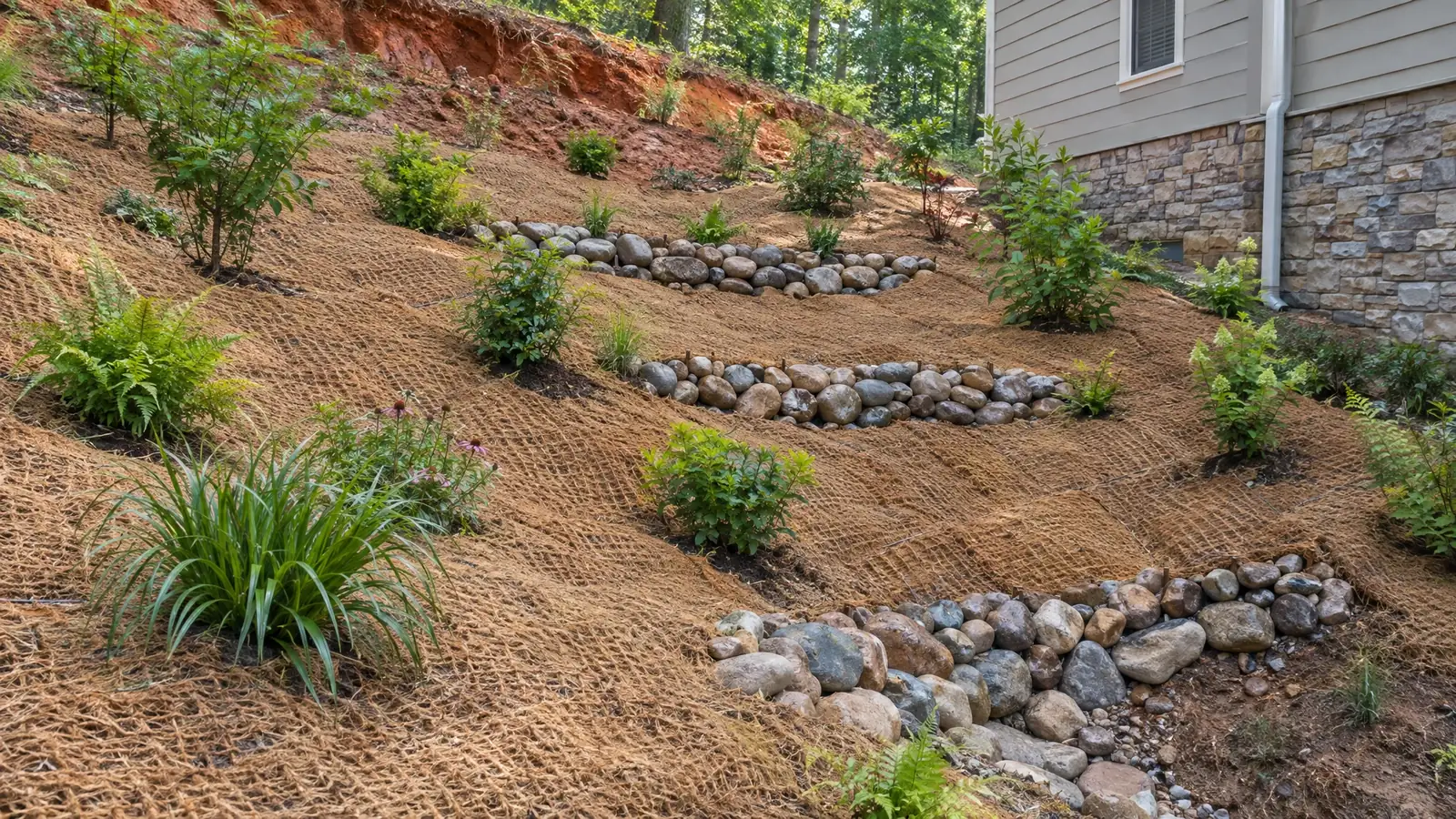
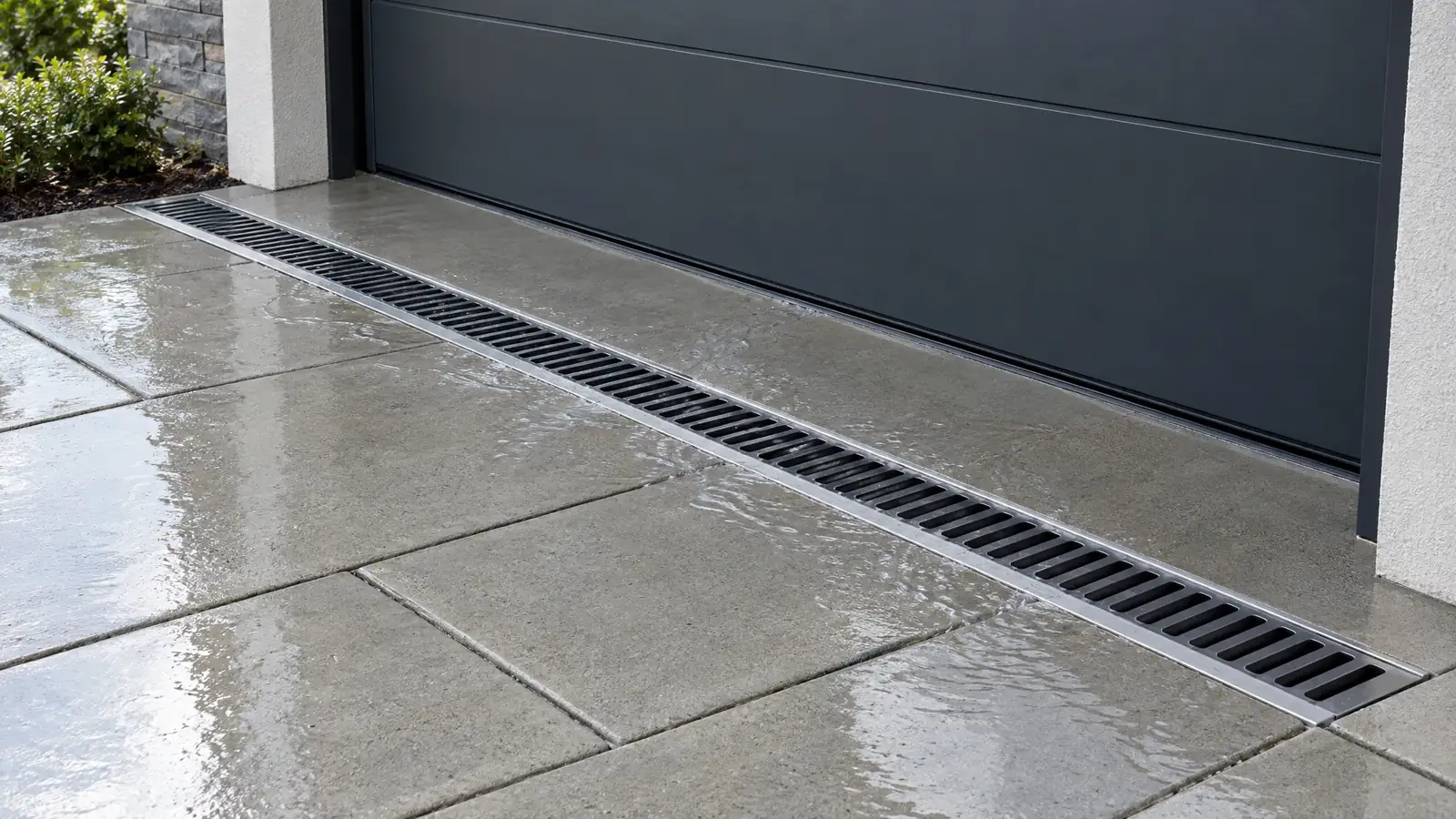
Swales and downspout lines above the wall keep surface water from flooding the backfill.
Existing walls
If a wall is bulging or leaking, the first step is to relieve the water. Severe movement needs a structural repair.
Quick answers
Do all retaining walls need drains?
Most do, especially above a few feet or in clay soil.
Can I add a drain behind an existing wall?
Often yes, by excavating behind it.
Want a professional opinion on your property?
We offer a free visit and a clear written plan. Call (615) 393-6985 or use the form below.