Key takeaways
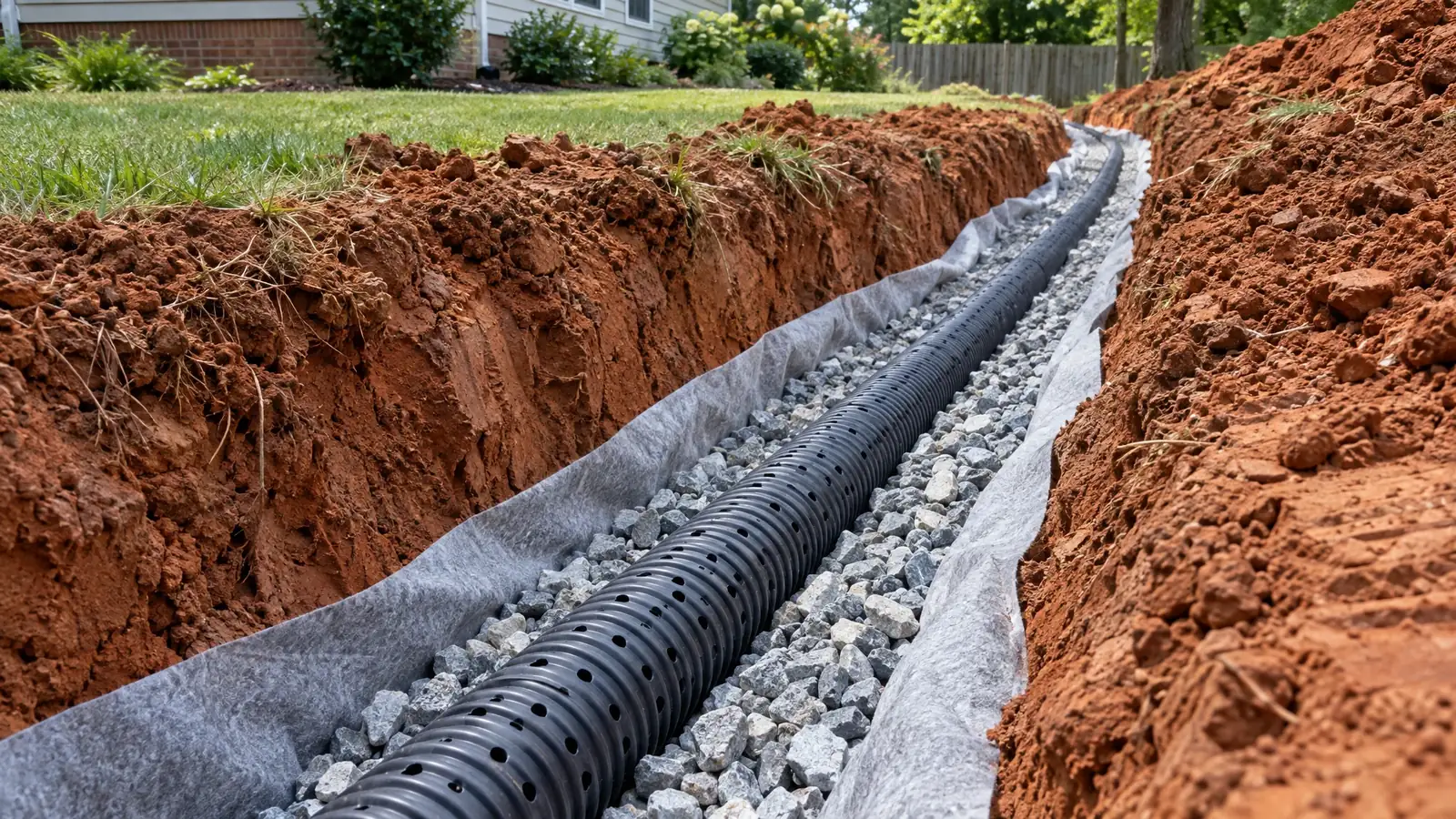
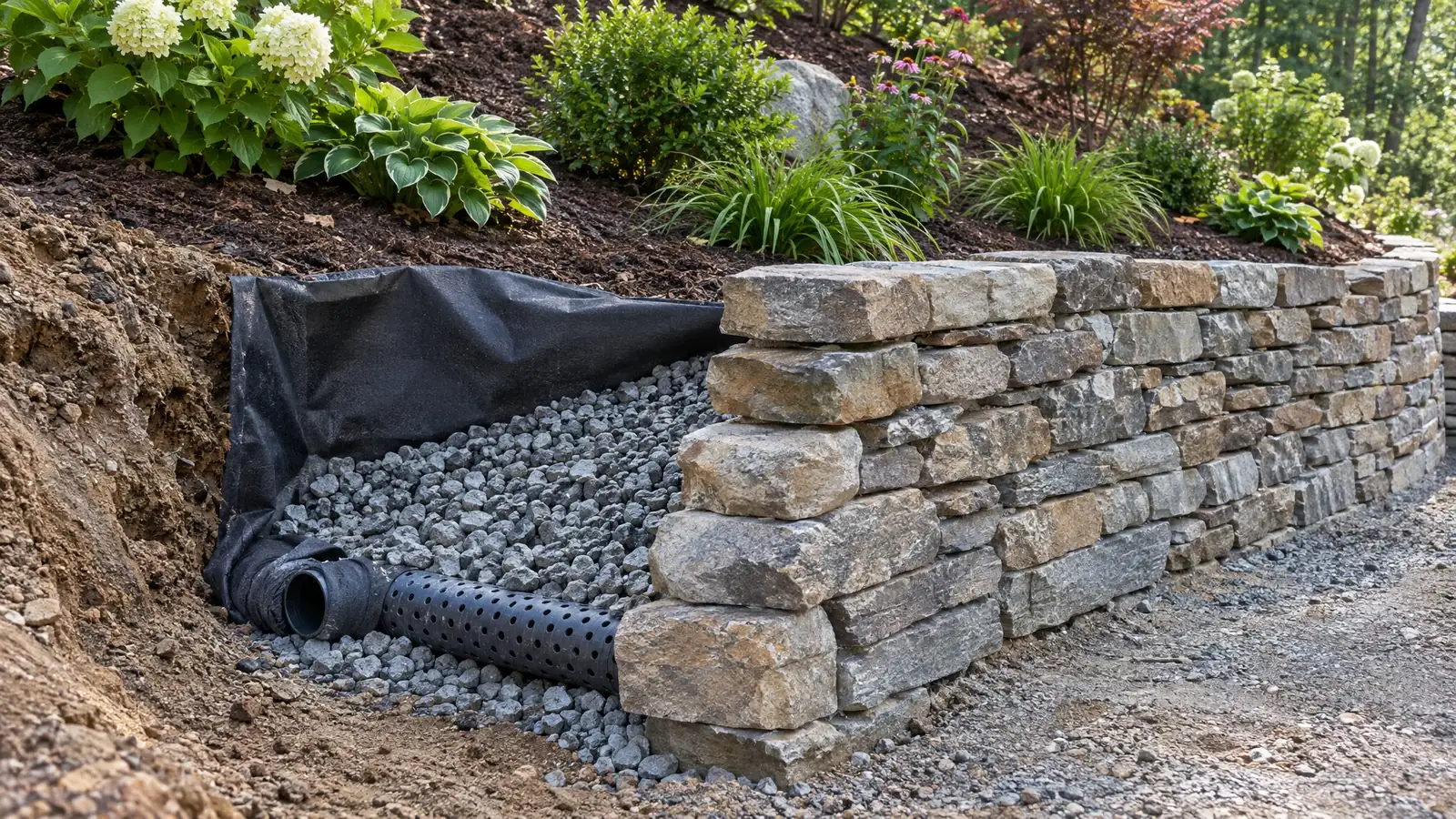
- French drains collect subsurface and shallow water along a line
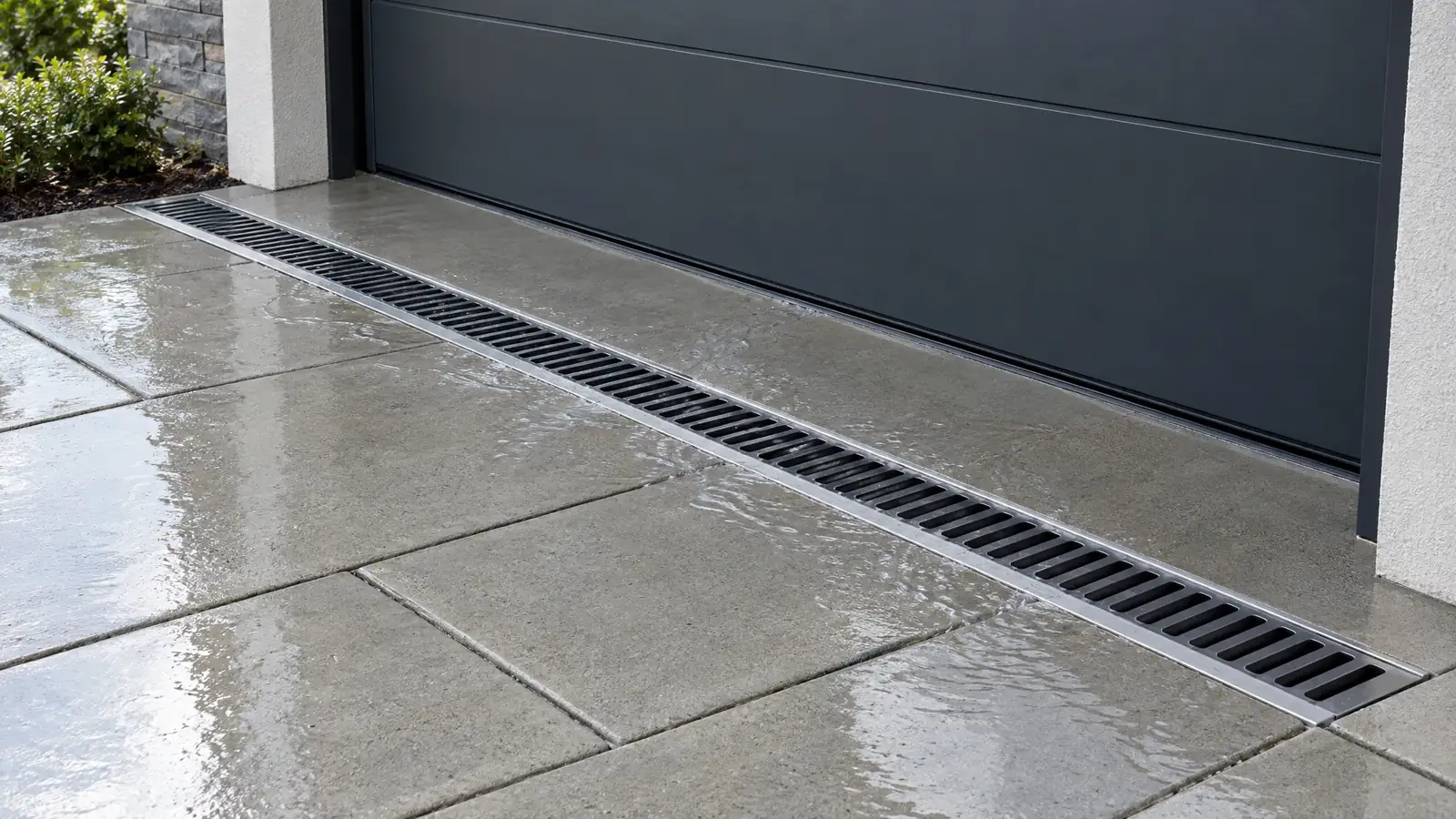
- Channel drains catch surface sheet flow across a width
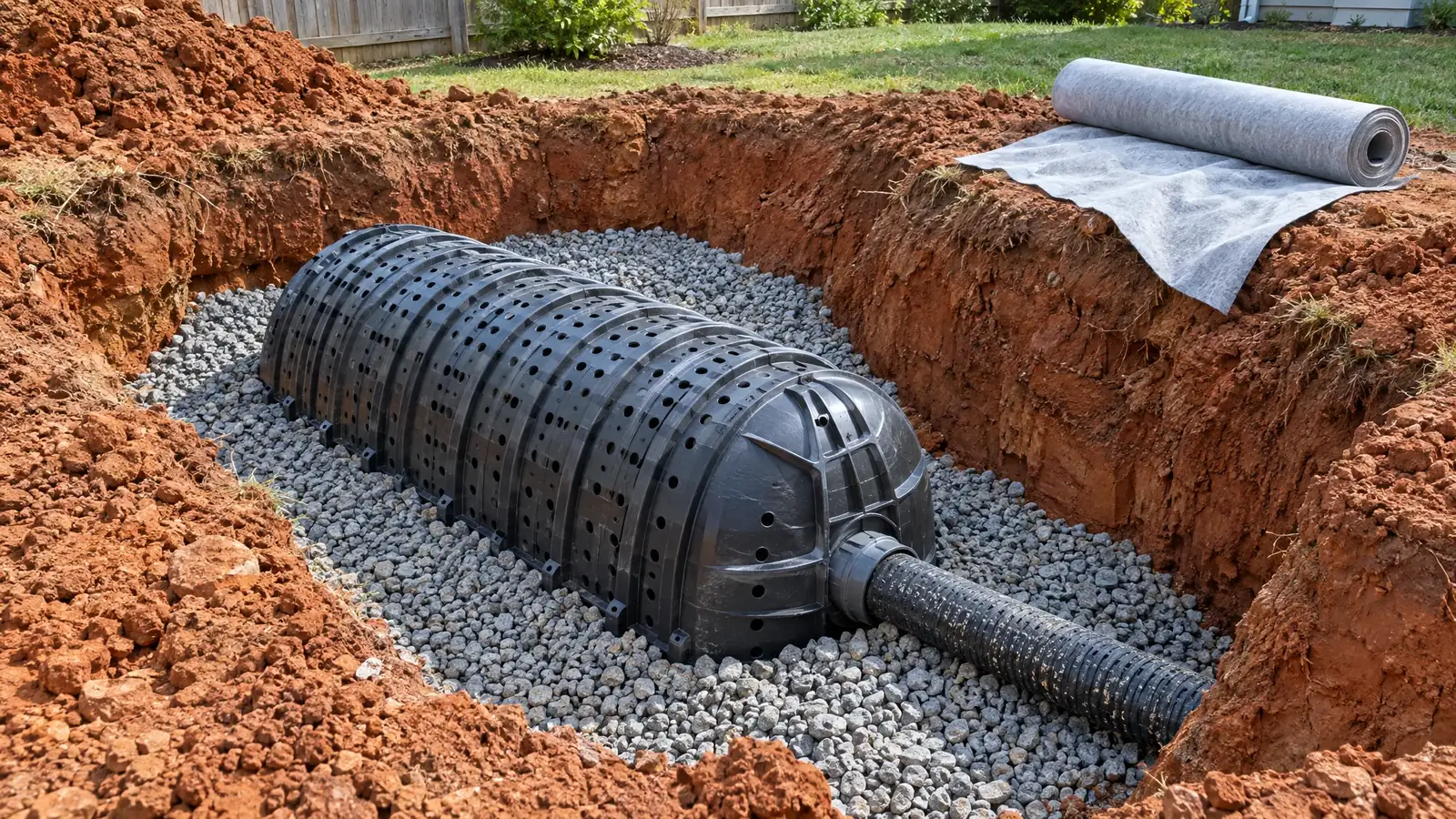
- Dry wells store water where no outlet exists
- Most yards benefit from a combination
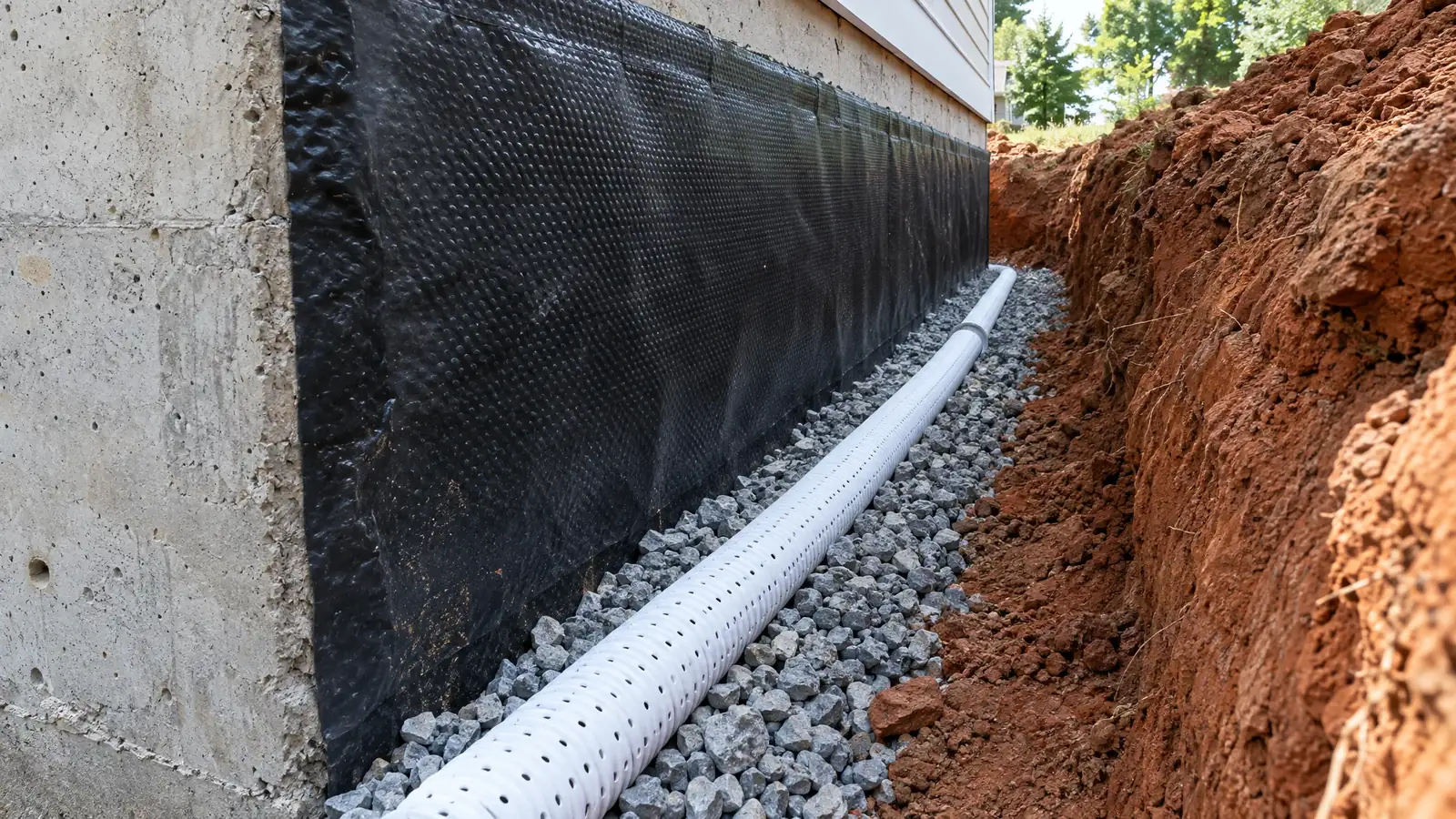
French drains
Best at intercepting water moving through the soil, for example along the bottom of a slope or against a foundation. They need an outlet.
Channel drains
Best where water arrives across the surface as a sheet, such as a driveway, patio or walkway. A long, narrow grate catches the whole flow before it reaches a vulnerable spot.
Dry wells
Best where there is nowhere to send the water. A dry well stores storm water and lets it soak slowly into the soil. They depend on soil that can absorb water, so slow-draining clay needs larger wells or a different outlet.
Catch basins
Catch basins are point collectors at low spots, usually feeding pipe that goes to an outlet. They are often the bridge between surface water and piped drainage.
How to choose
Match the tool to how the water arrives: through the soil, across the surface or in a pipe from the roof. Then match the outlet to what your lot offers. Many lots use two or three tools together, and we plan them as one system.
Quick answers
Which one is cheapest?
It depends on length, depth and finish. The cheapest is the one that actually fixes the cause.
Can I use all three?
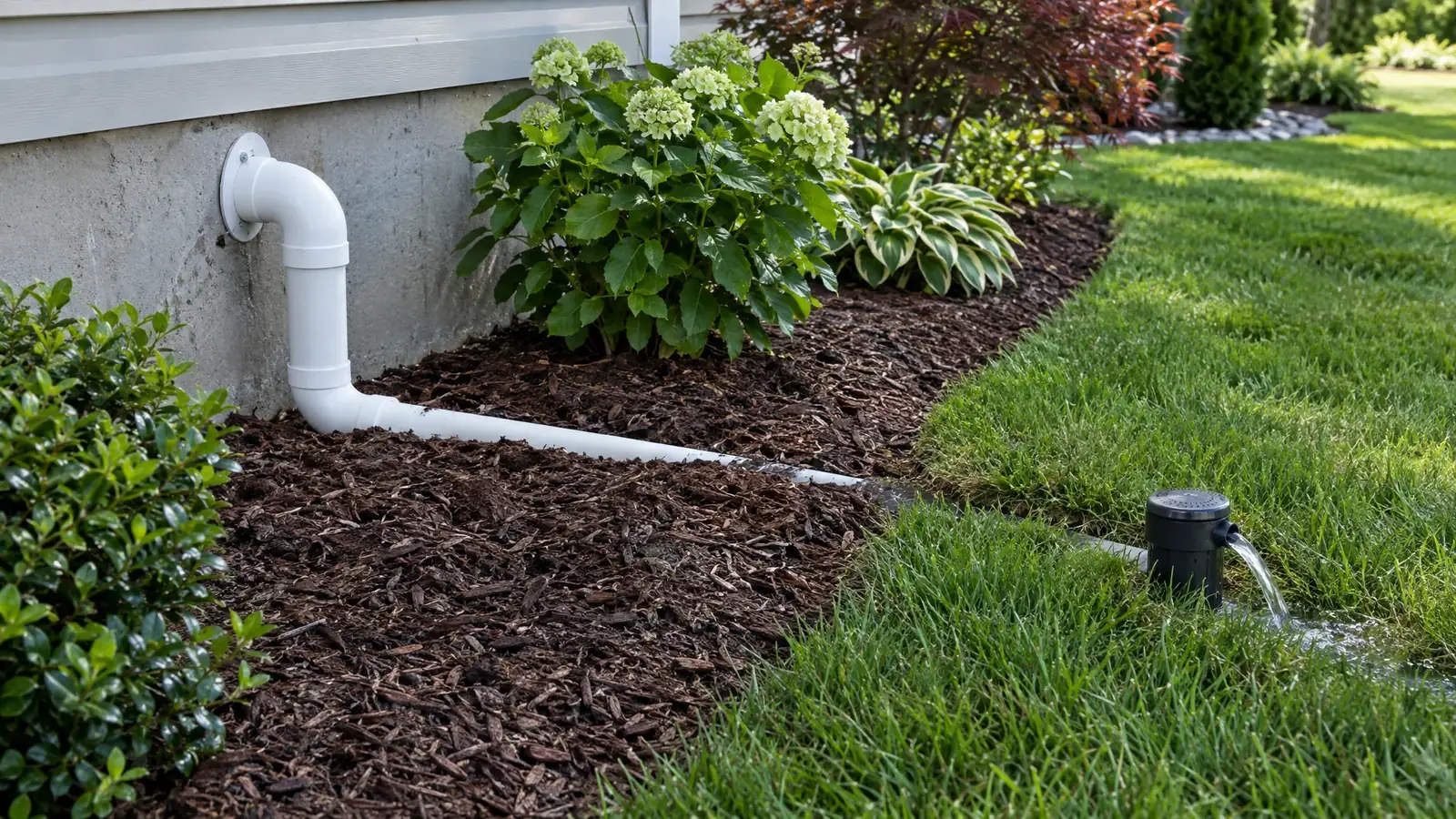
Yes. A common system pairs downspout lines, a catch basin and a French drain with a shared outlet.
Want a professional opinion on your property?
We offer a free visit and a clear written plan. Call (615) 393-6985 or use the form below.