Key takeaways
- Clay soils drain very slowly compared with sandy soils
- Much of Middle Tennessee has clay-rich soil
- Compaction during construction makes it worse
- Drains must move water that the soil will not
Why clay holds water
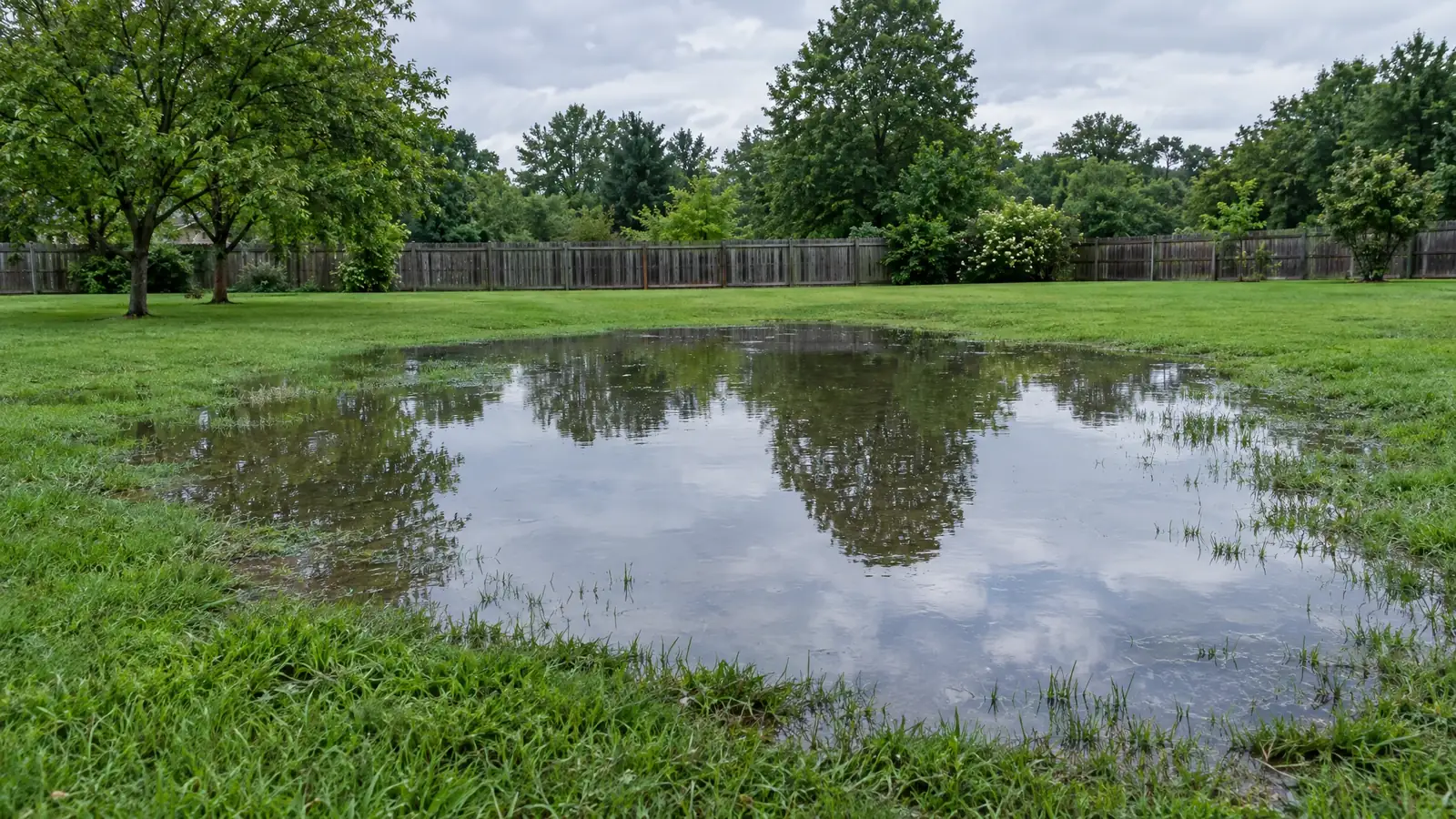
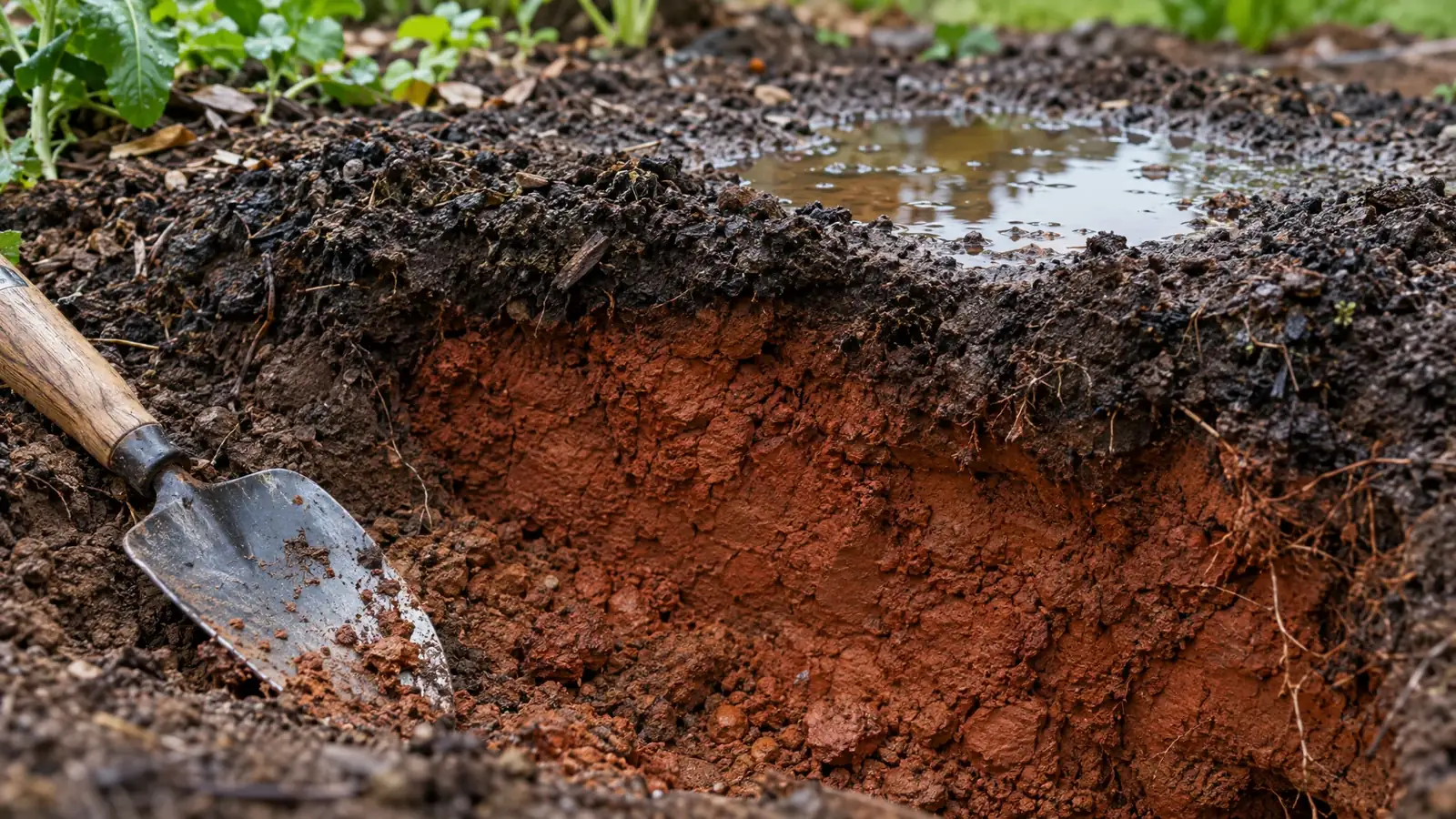
Clay particles are tiny and pack tightly, leaving very small pores. Water enters slowly, and once soaked it leaves slowly. In heavy rain, the surface can saturate before water has time to soak in, so it runs off or ponds.
Compaction makes it worse
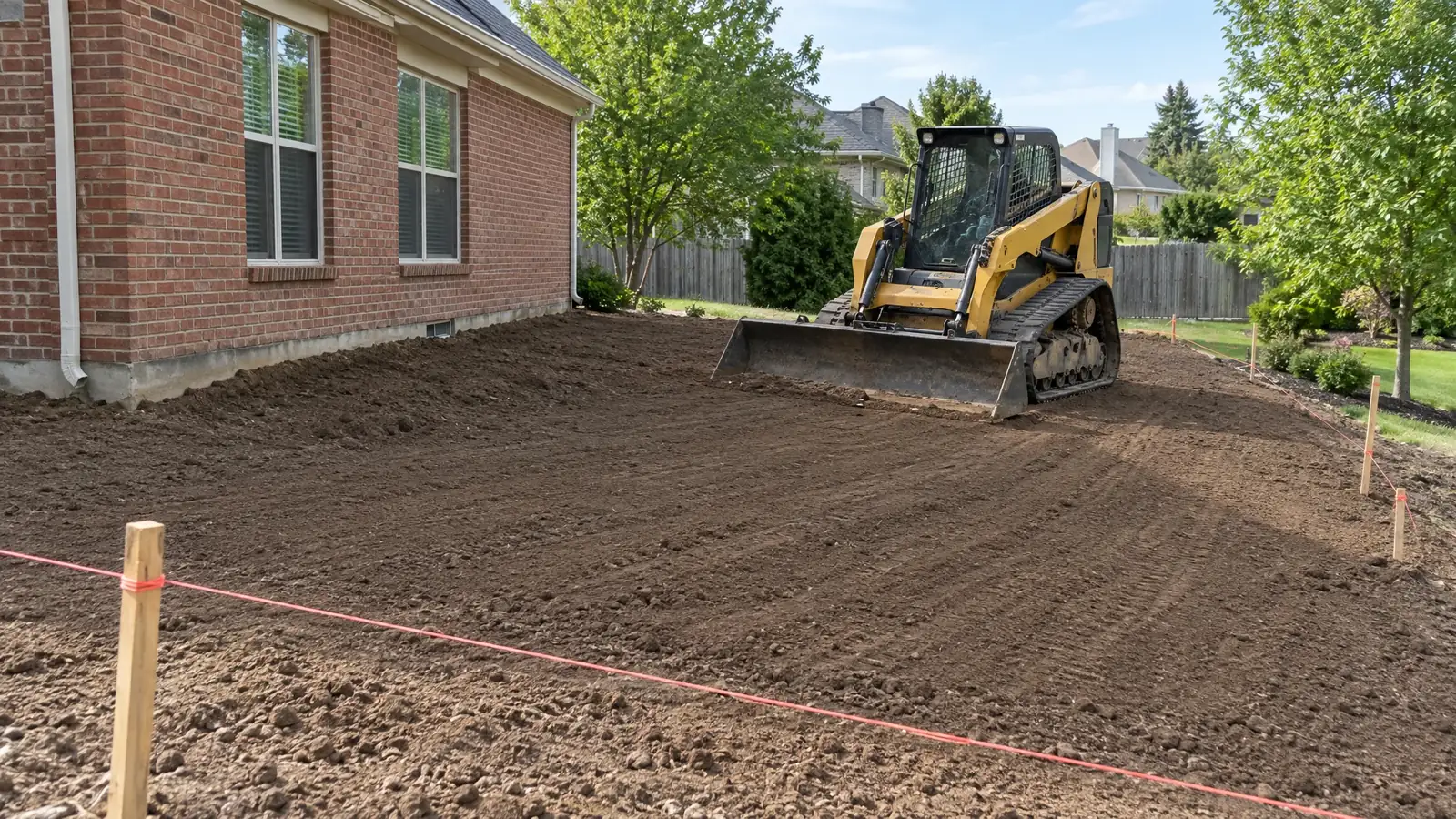
New construction often compacts the soil with heavy equipment and removes topsoil. The result is a hard, nearly impermeable layer just under the lawn that stops water from soaking in.
What it means for drains
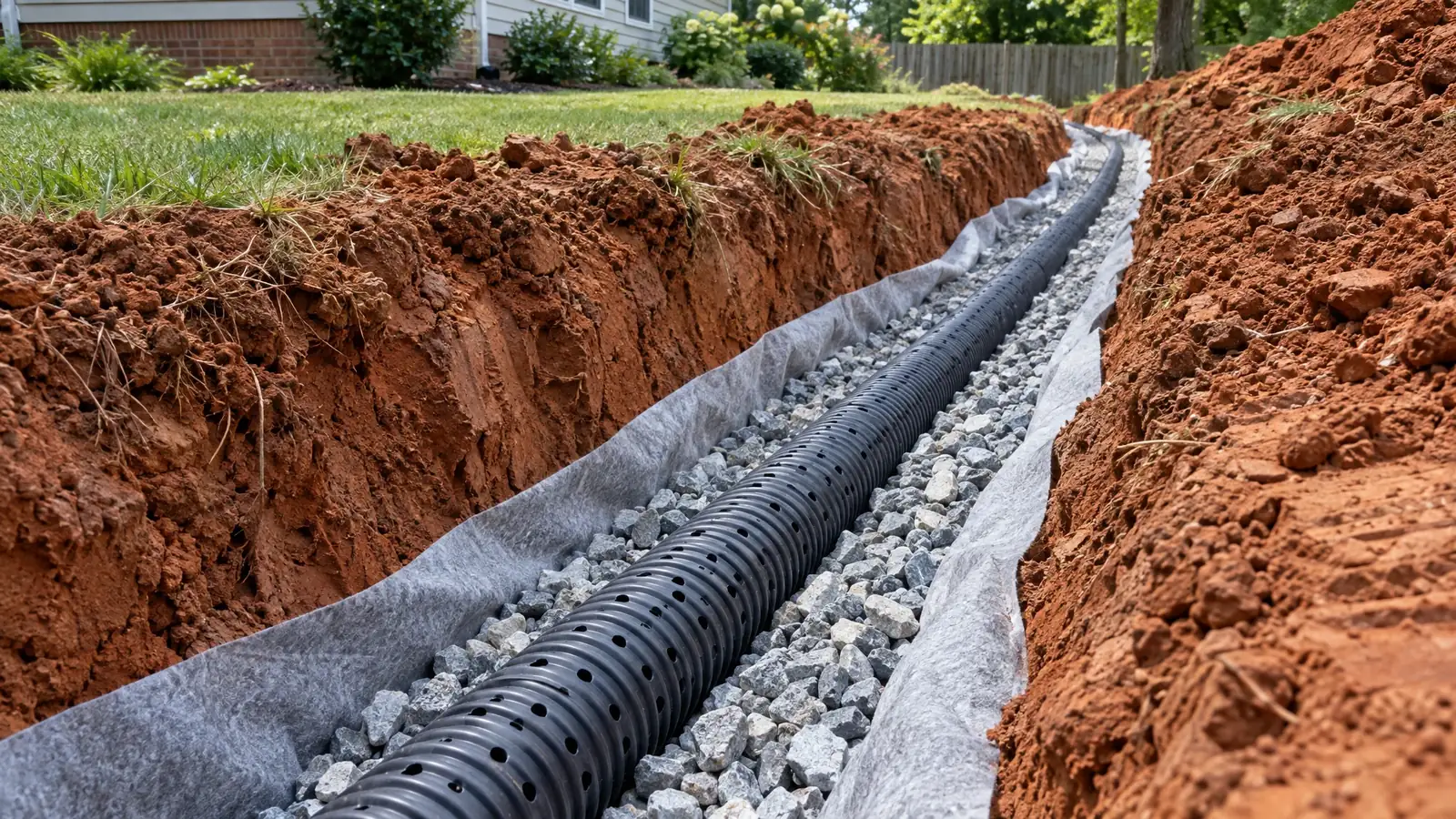
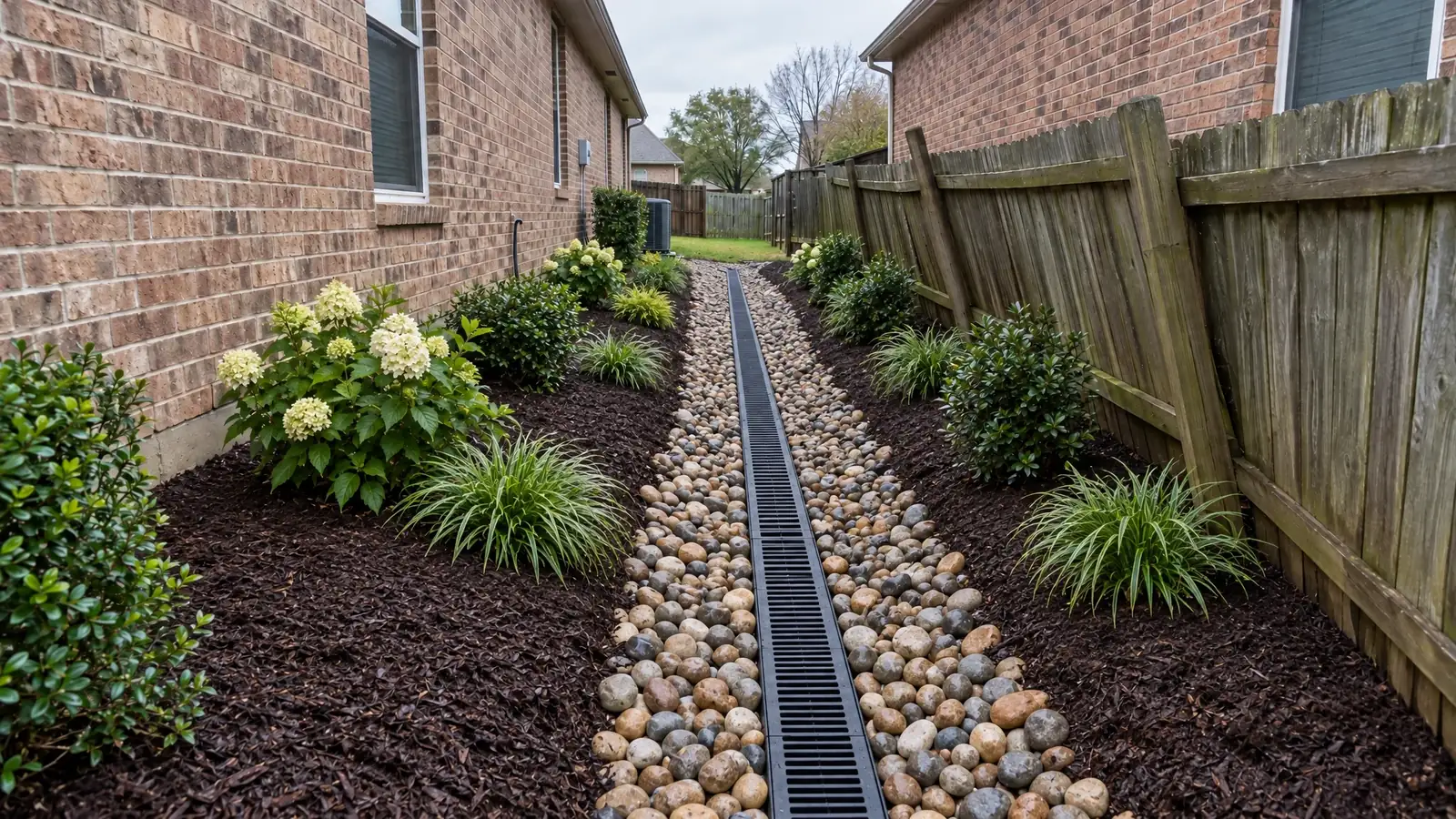
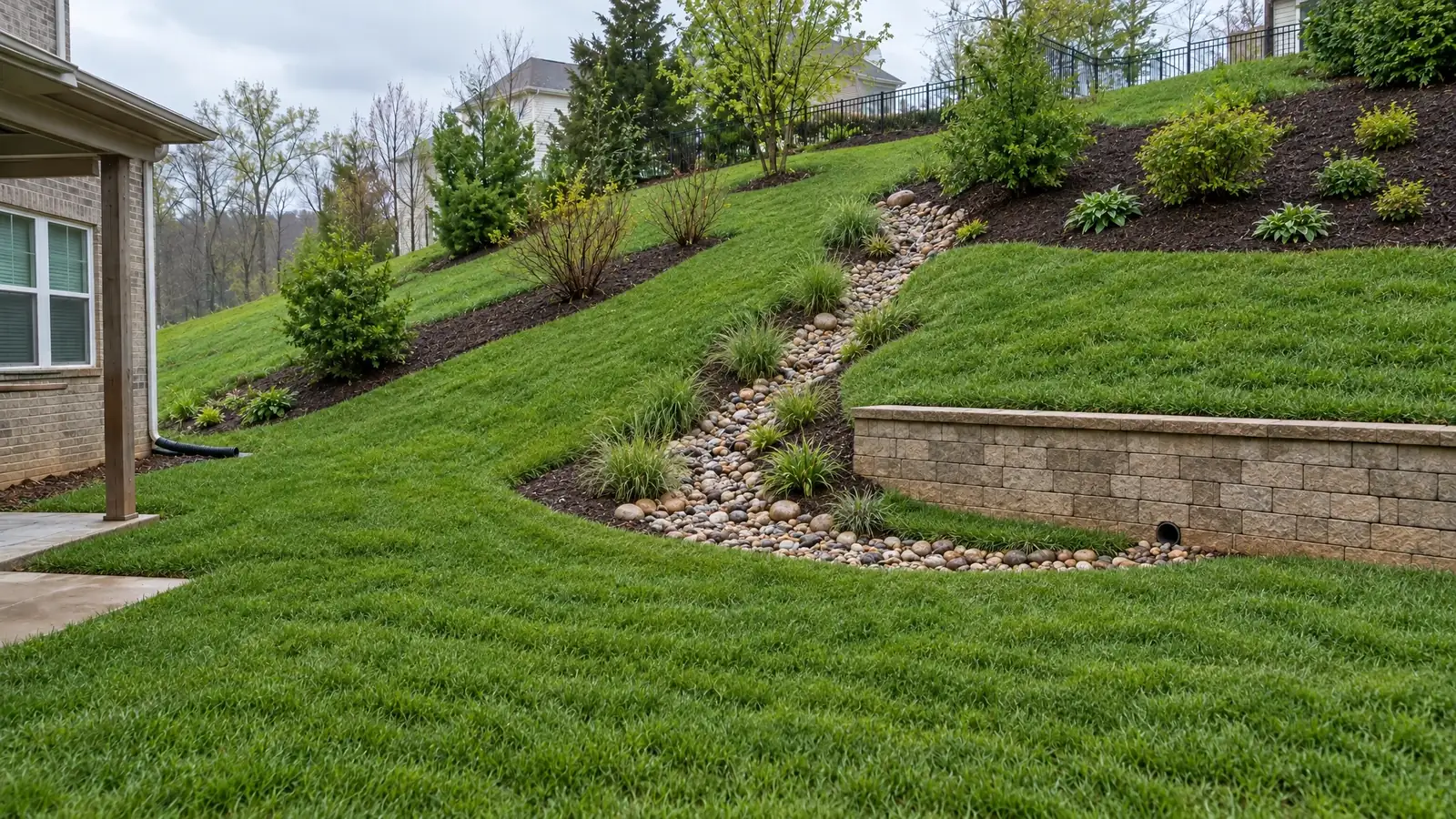
In clay, you cannot rely on soaking in. Drains need to move water along pipes and surface paths to an outlet. Dry wells are less reliable, and French drains must have clear outlets and gravel to carry water that the soil will not.
What actually helps
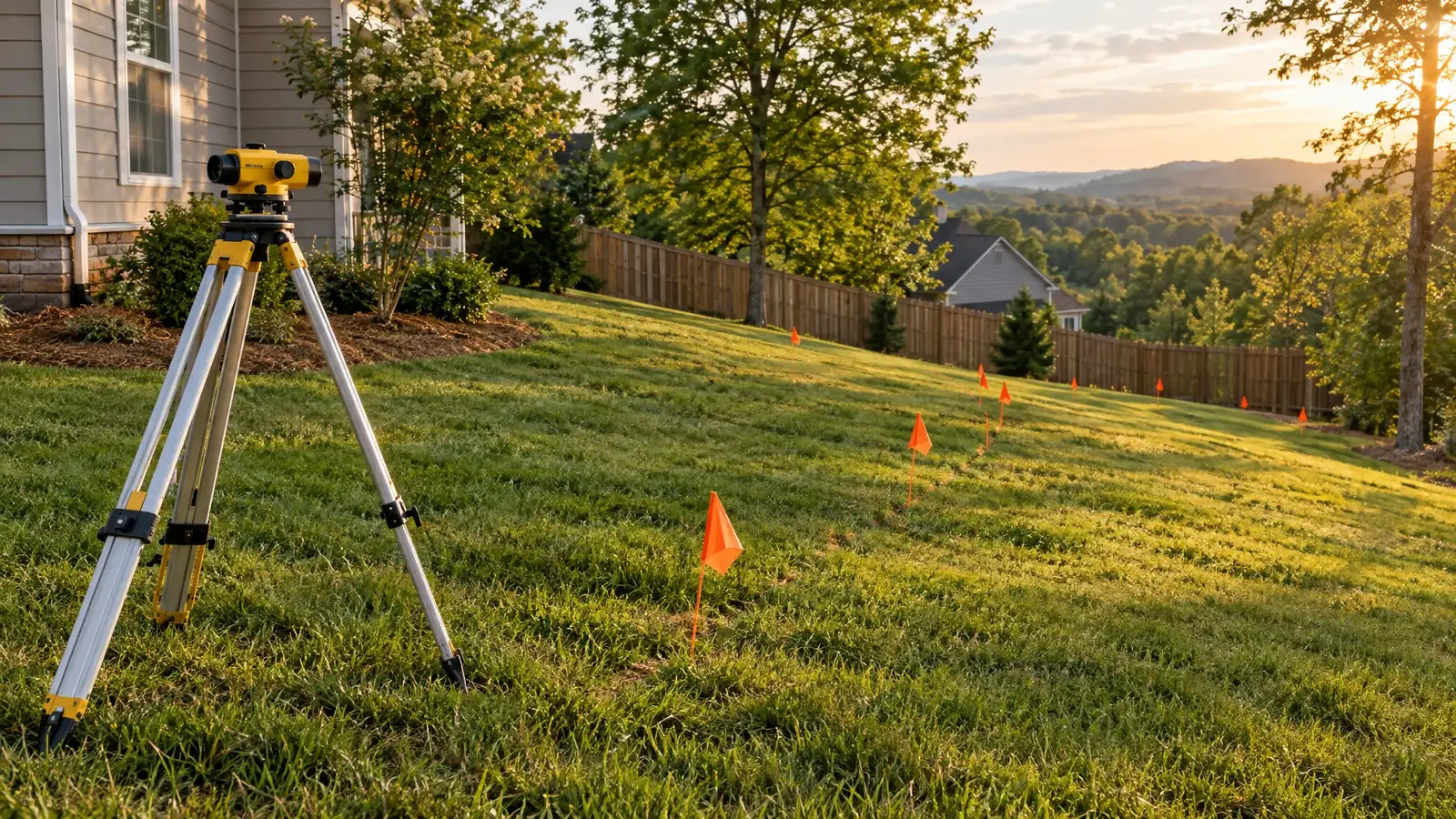
Grading that sheds water, drains that collect it, aeration and organic matter that improve the top layer, and downspouts that send roof water away. Amending soil helps lawns but does not replace a drain on a wet site.
A note on bedrock
Limestone is close to the surface in many parts of Middle Tennessee, which can limit trench depth and affect where water goes. We account for it in the design.
Quick answers
Can I fix clay drainage by adding sand?
Mixing sand into clay can make it worse. Proper drains and grading are the reliable solution.
Does clay mean I need a drain?
Not always, but clay plus any low area or roof runoff often does.
Want a professional opinion on your property?
We offer a free visit and a clear written plan. Call (615) 393-6985 or use the form below.