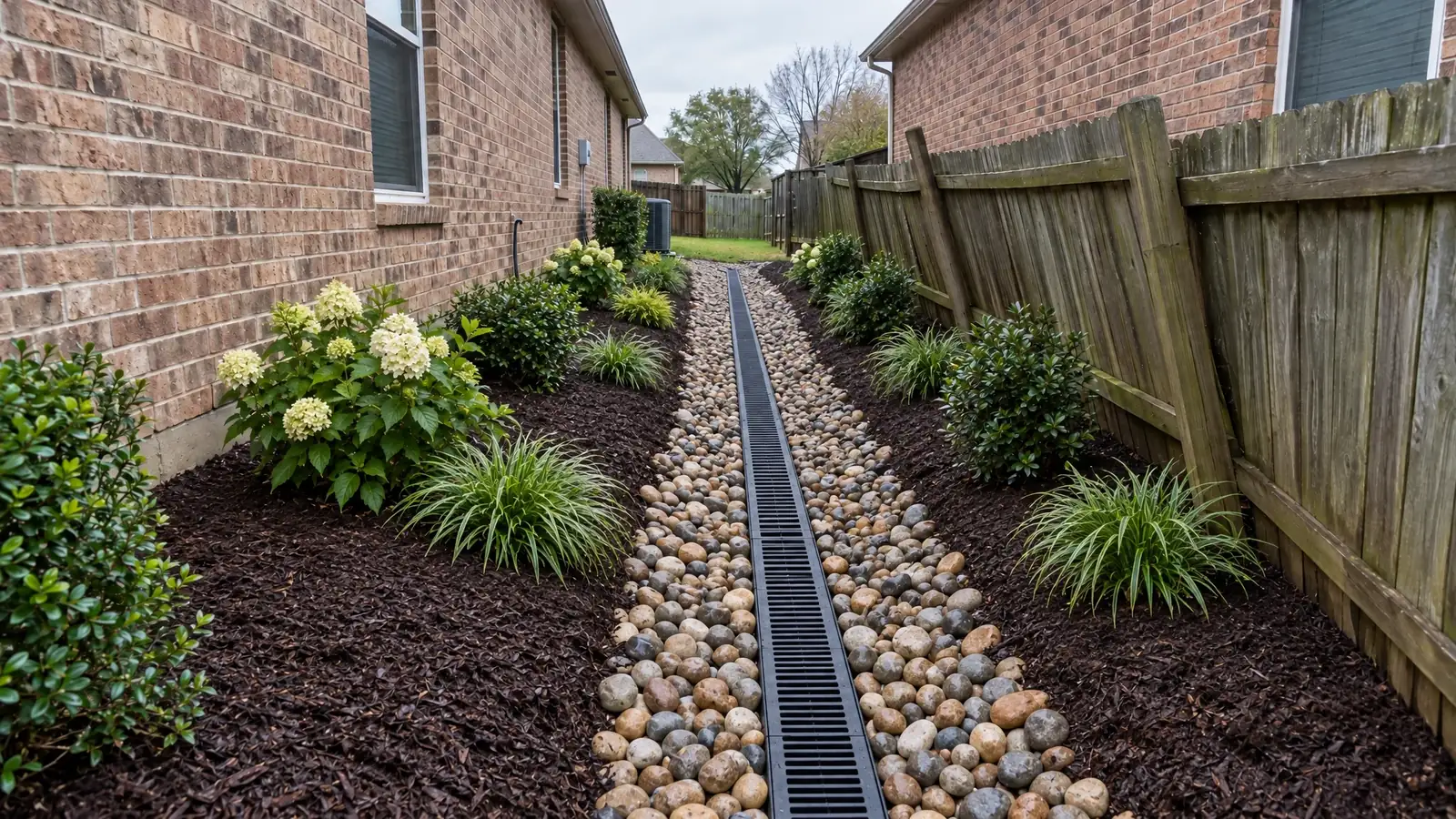
Key takeaways
- Water that stays more than a day or two after rain is a warning sign
- Moss, sedge and mushrooms point to constant moisture
- Foundation staining and a musty basement are red flags
- Early fixes are far cheaper than foundation repair
On the lawn
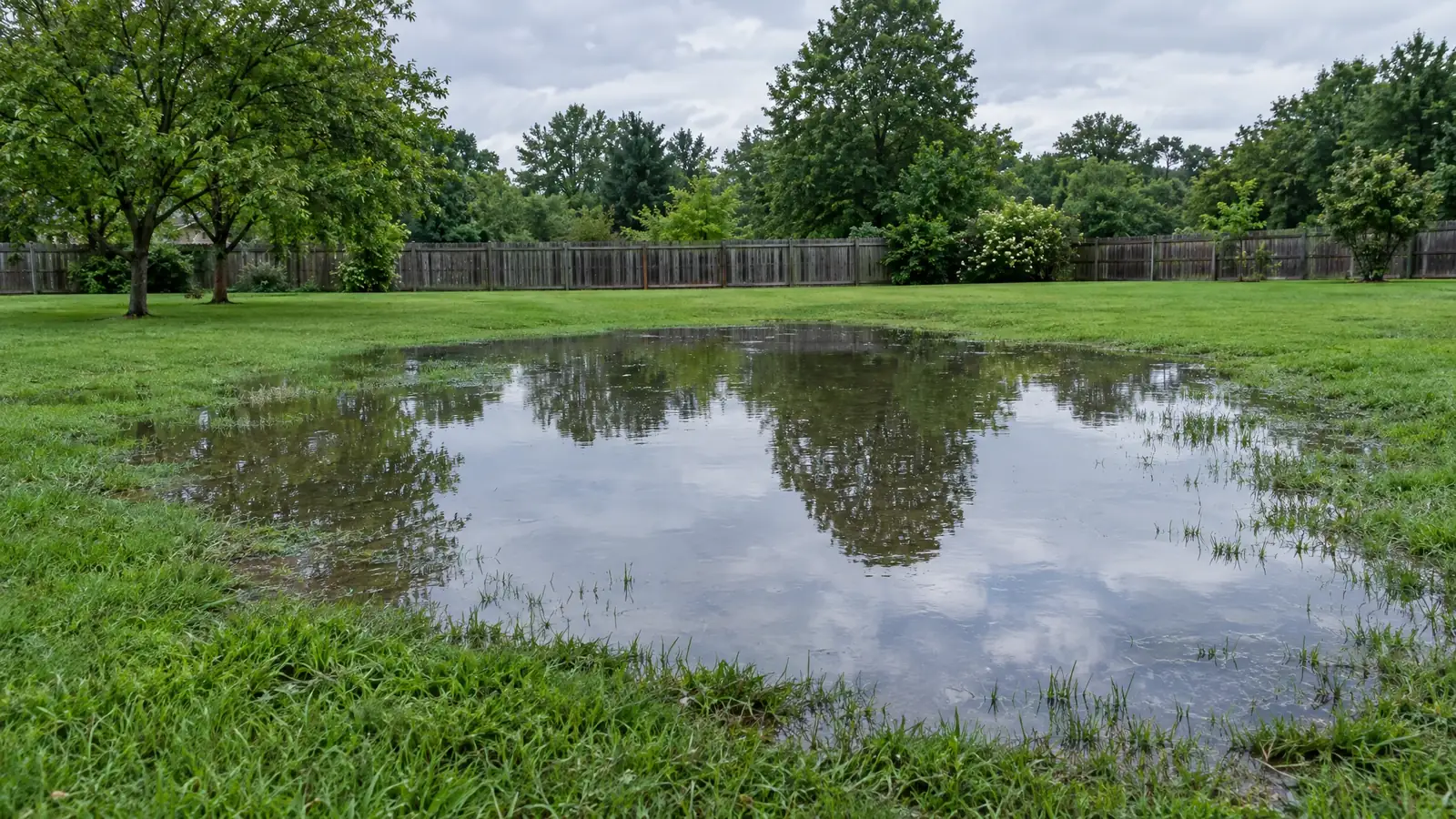
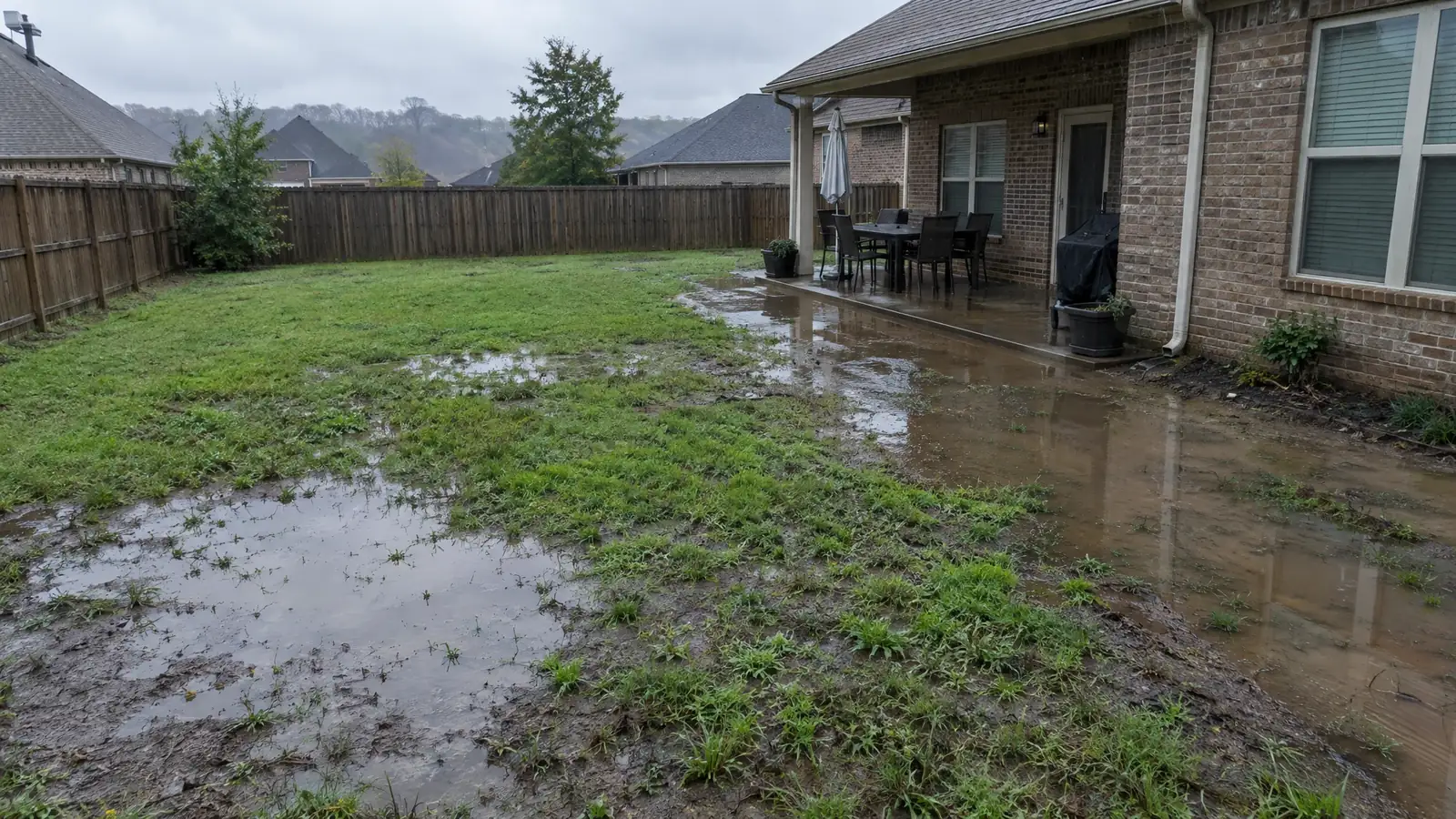
Puddles that linger, soft spots that squish underfoot, patches of moss or algae, and areas where grass thins and dies are all signs that soil is staying saturated.
Mushrooms and sedge (a grass-like plant with triangular stems) often thrive where drainage is poor.
Near the house
Water pooling beside the foundation, mud splash on the lower siding or brick, and soil that has washed away from under downspouts show that roof water or surface water is arriving at the house.
Inside the house
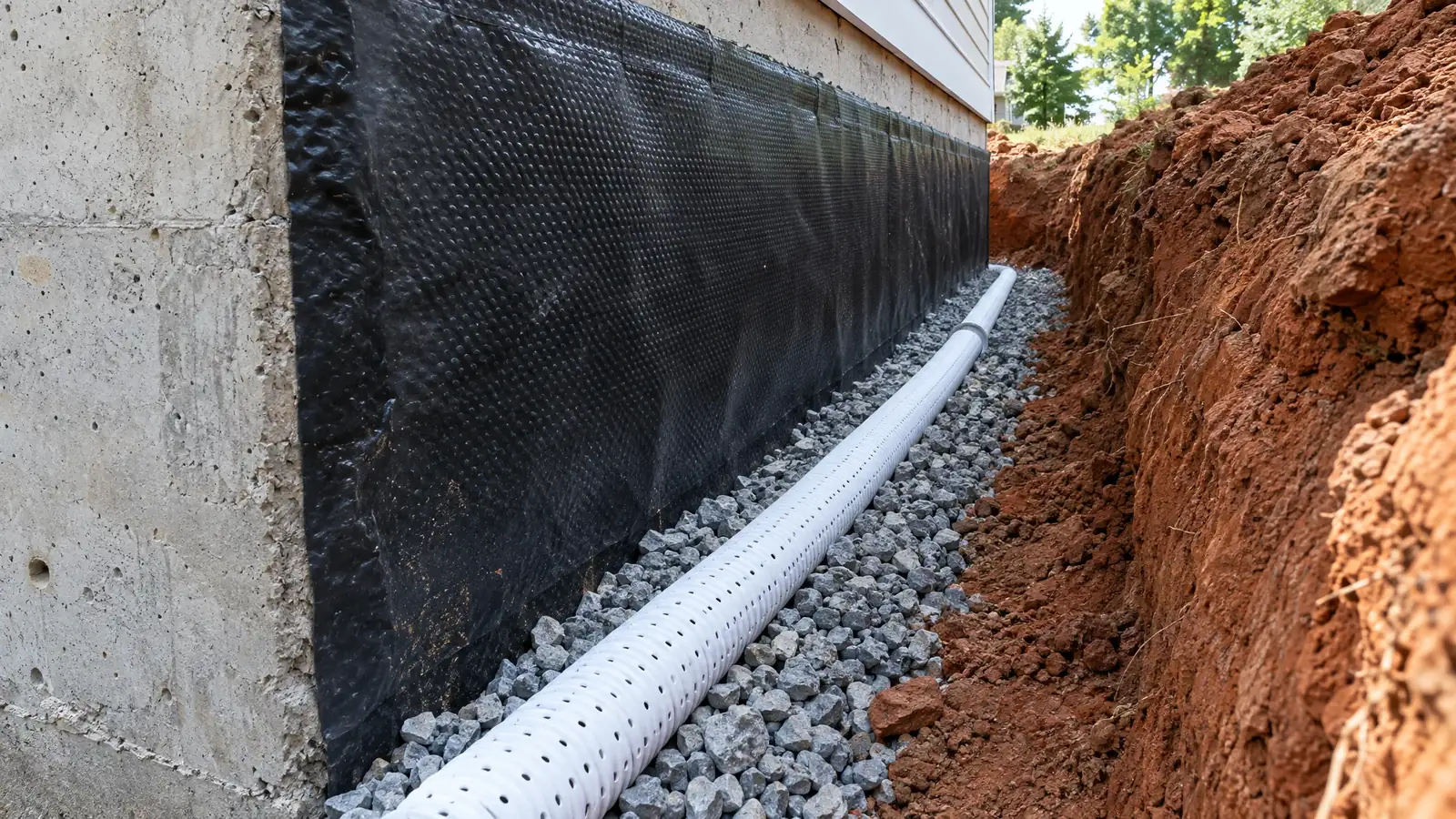
A musty smell in the basement or crawl space, damp spots on the wall-floor joint, white mineral deposits on block or concrete and mold are late-stage signs of water pressing on the foundation.
On slopes and pavement
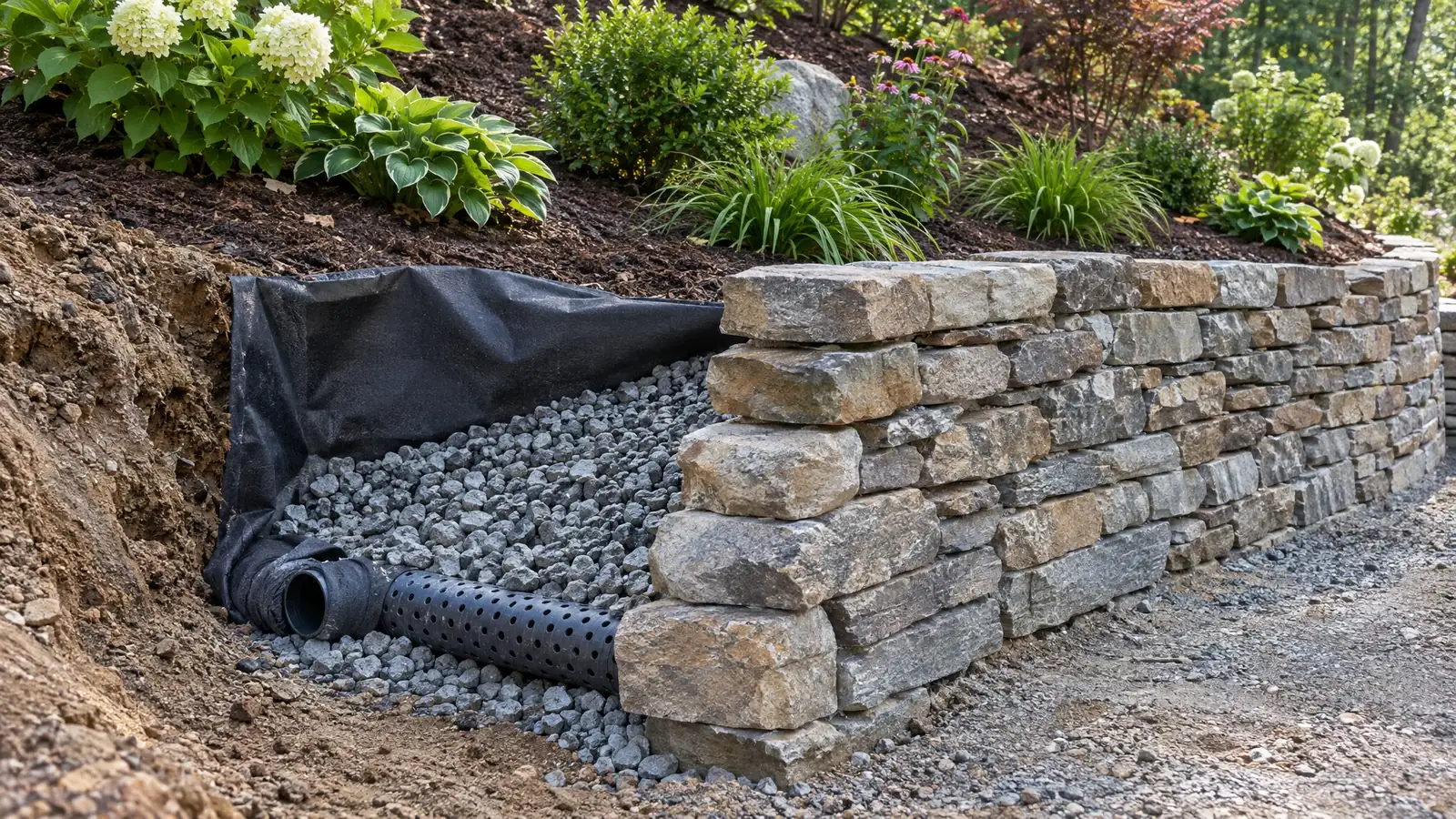
Gullies, exposed roots, mulch that migrates downhill, gravel washed from the driveway and ponds on pavement indicate fast-moving or concentrated flow.
What to do first
Walk your property during or just after a rain and watch where water goes. Take photos and video. Check gutters and downspouts. Then call us, and show what you saw. Knowing the paths of the water makes the right fix obvious.
Quick answers
How long should a yard stay wet after rain?
Clay soils may stay damp for a day or so, but standing water beyond two or three days usually signals a drainage problem.
Can drainage problems hurt my foundation?
Persistent water near the foundation can contribute to seepage, soil movement and moisture problems. Early correction helps.
Want a professional opinion on your property?
We offer a free visit and a clear written plan. Call (615) 393-6985 or use the form below.