Key takeaways
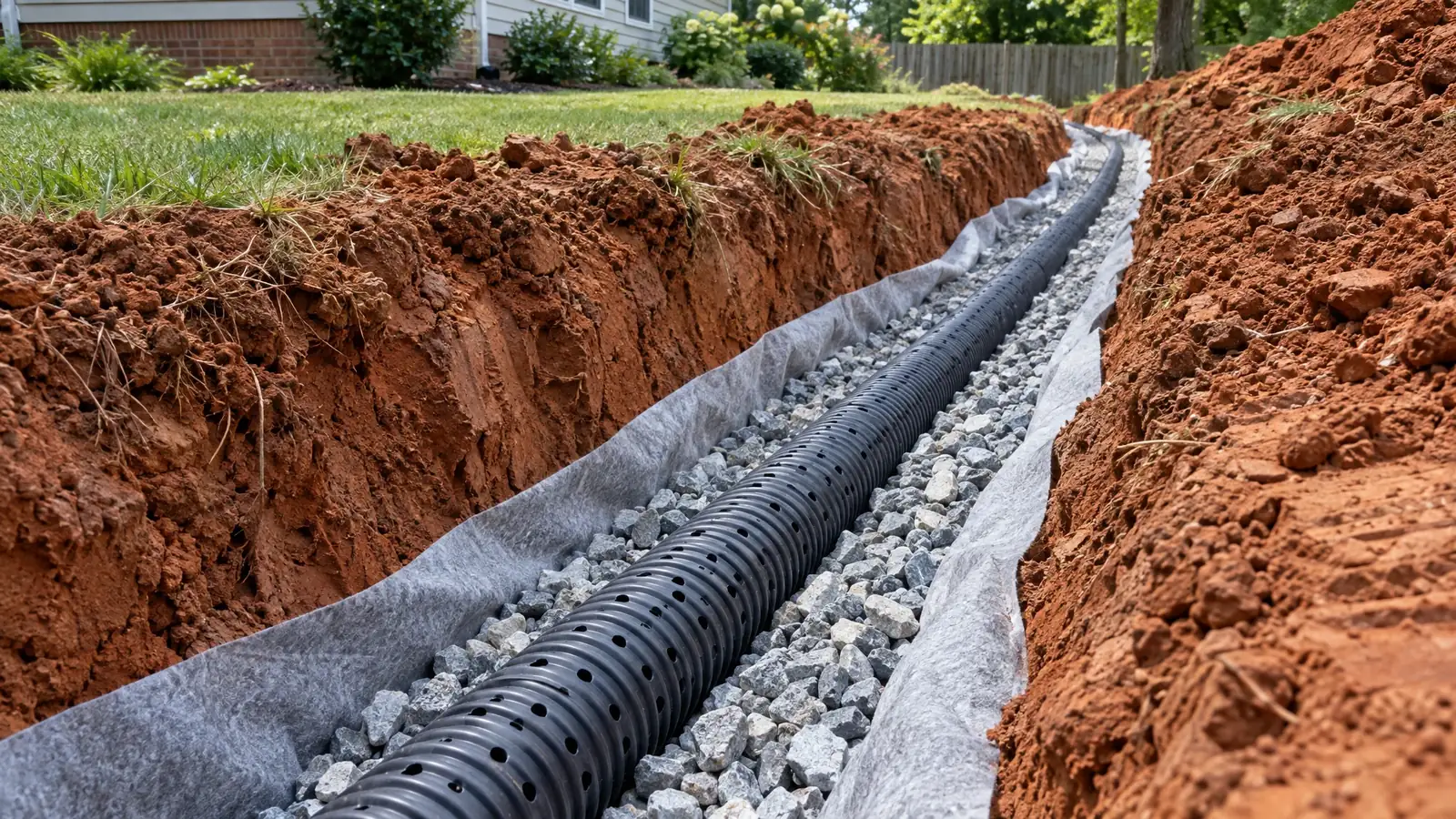
- Yard drains are often 12 to 24 inches deep
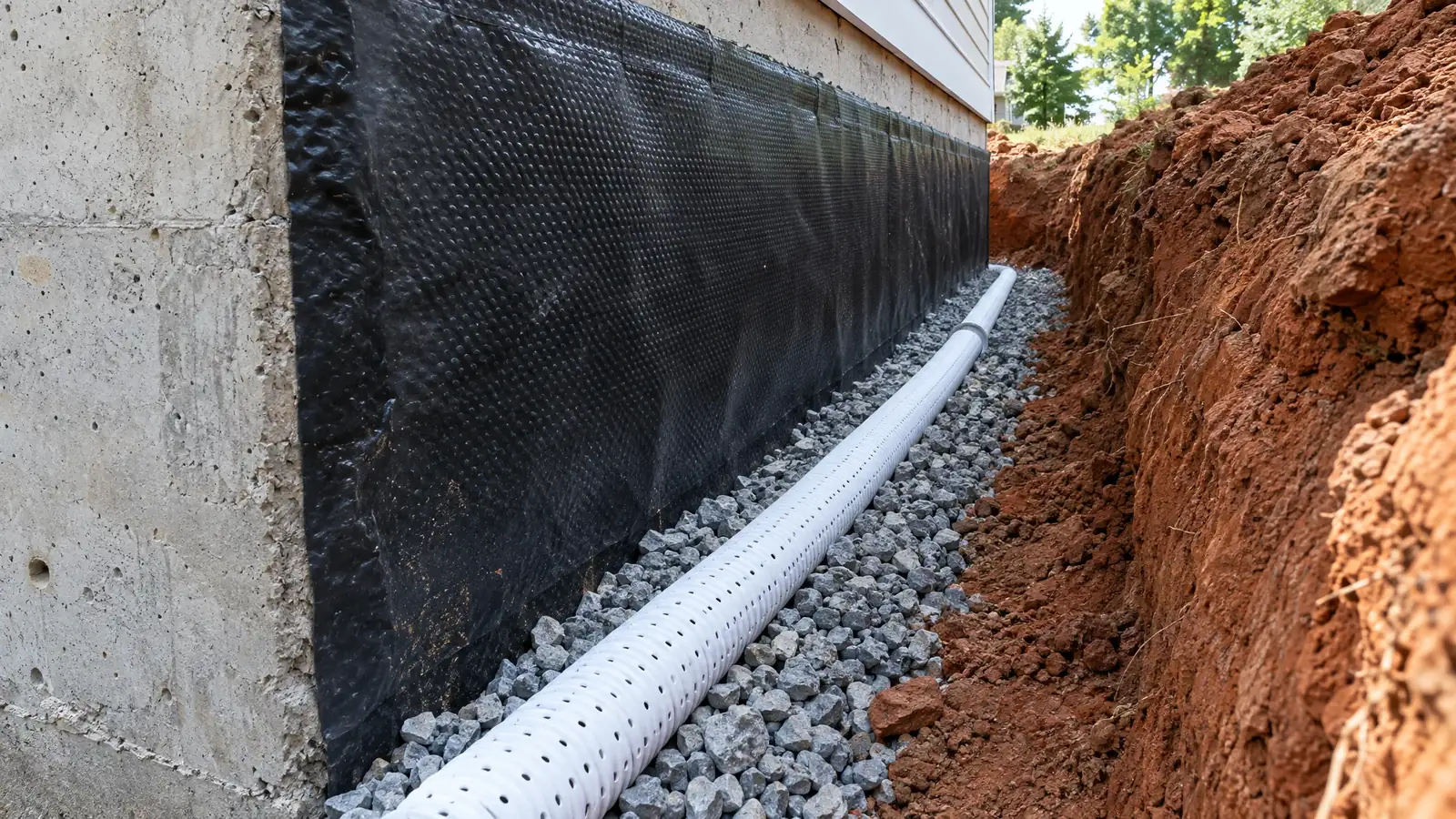
- Foundation drains go down to the footing
- Depth is limited by the outlet elevation
- Shallow bedrock can limit depth
Match the depth to the water
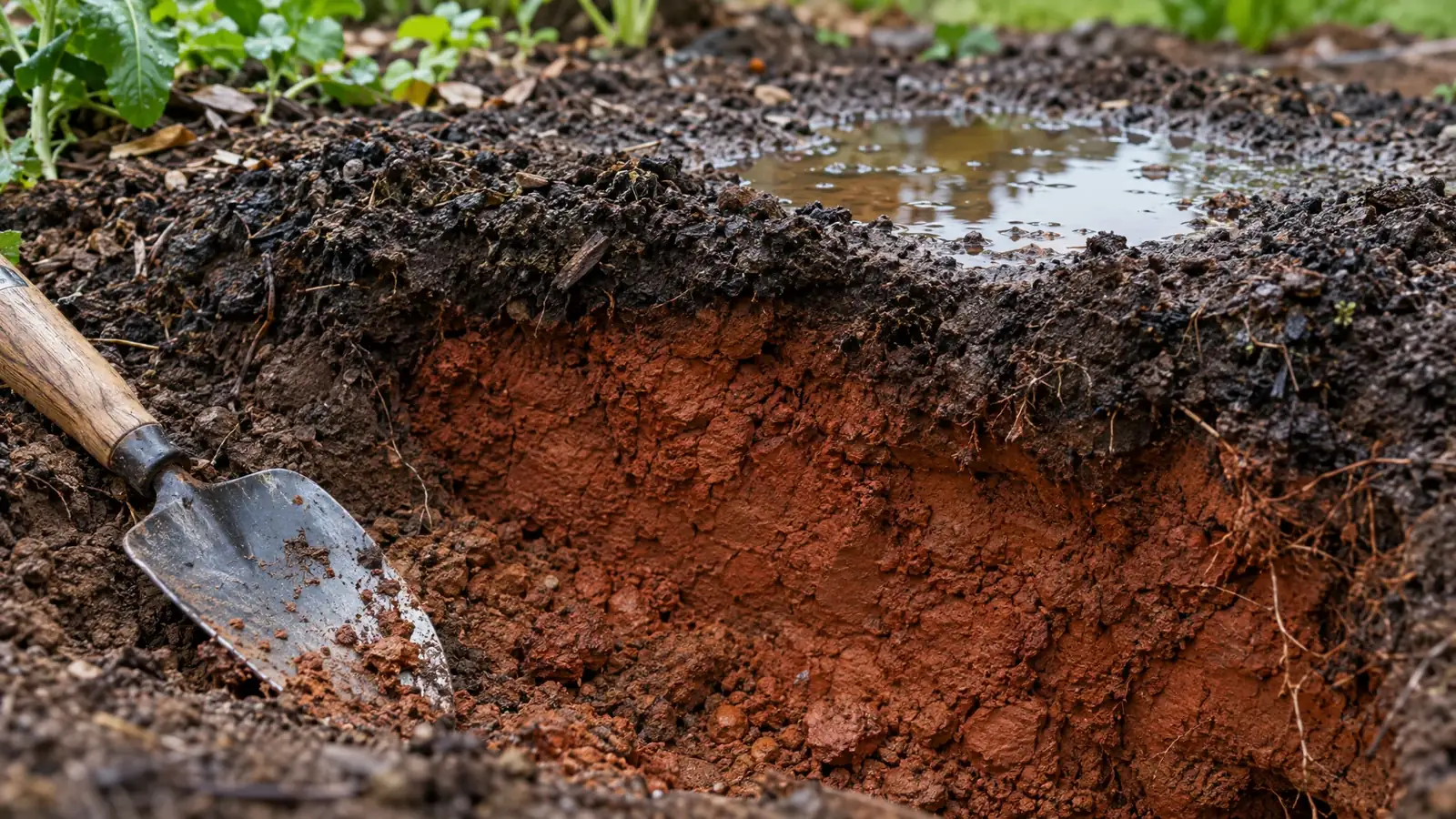
A drain should sit below the water you are trying to intercept. For surface and shallow water, one to two feet is common. For groundwater beside a basement wall, it goes to the footing.
The outlet sets the limit
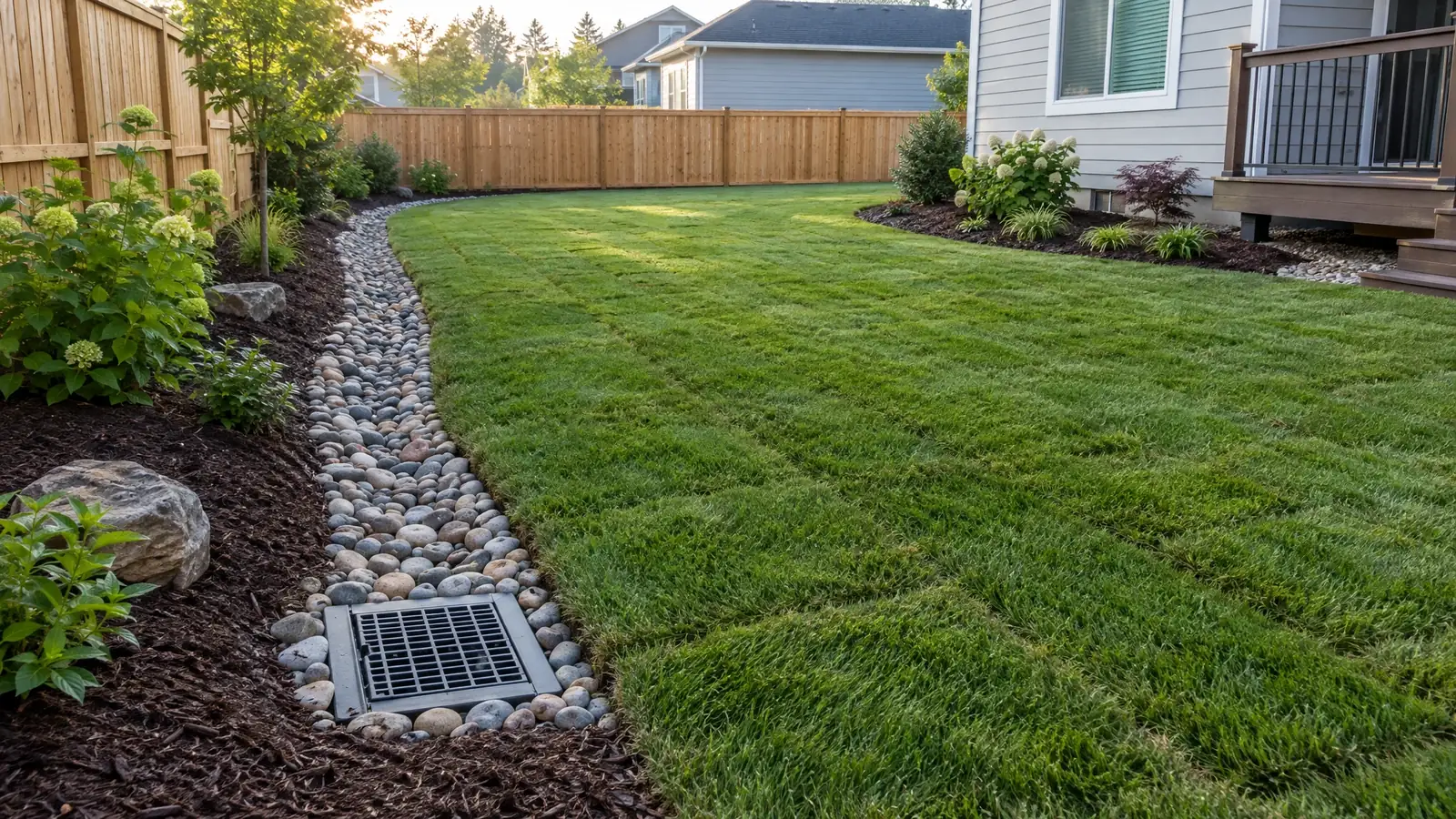
A drain cannot be deeper than its outlet allows. If the outlet is at the surface, the drain must rise to meet it as it slopes.
Width and stone
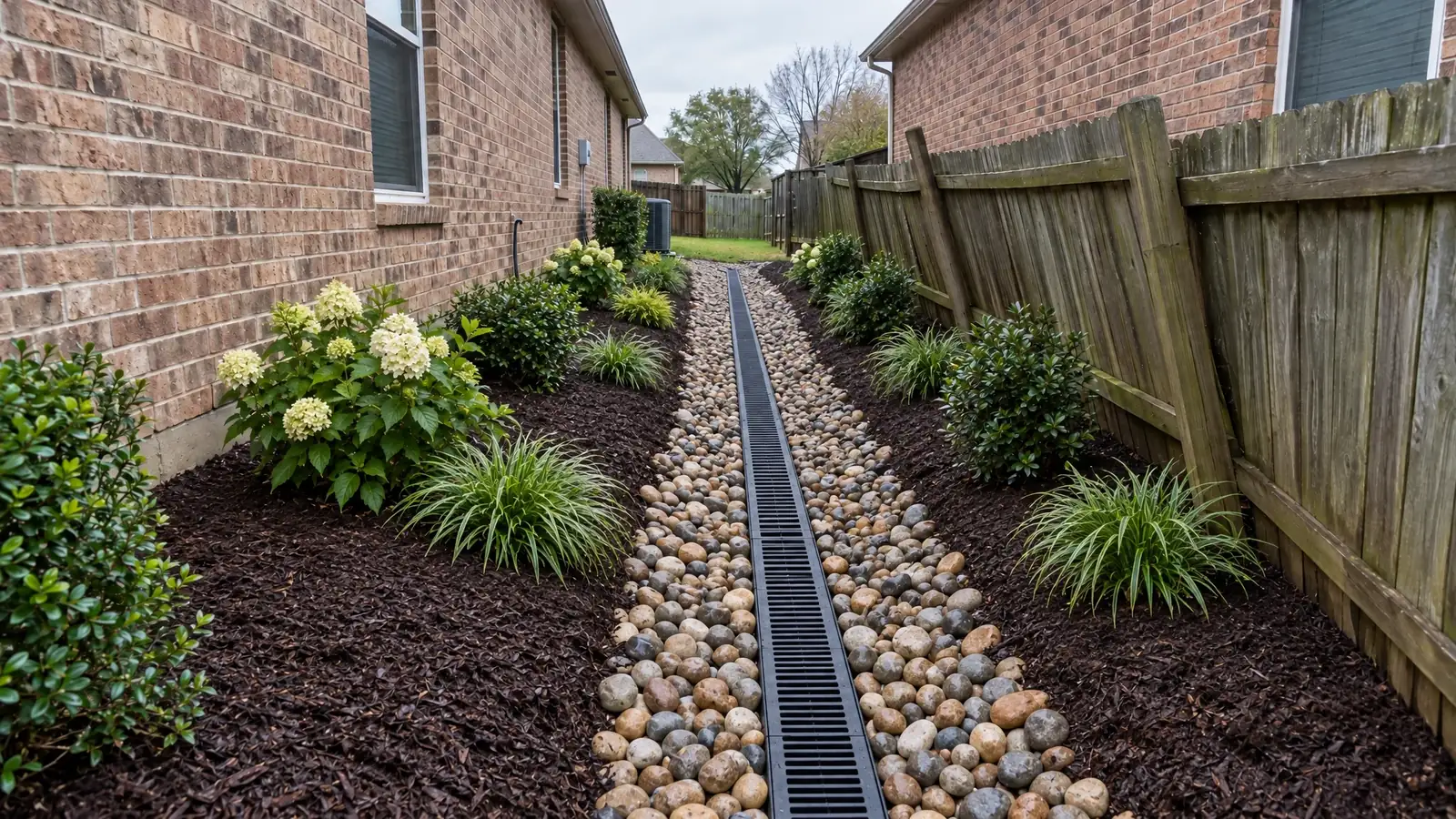
A typical trench is 8 to 12 inches wide, with gravel to within a few inches of the surface and topsoil or sod above.
Bedrock and utilities
Limestone, utilities and roots can change the layout. We locate utilities before digging.
Do not go deeper than needed
More depth means more cost and more disturbance. Right-sizing is the goal.
Quick answers
Is deeper better?
Not necessarily. The right depth is the one that solves your water problem and reaches the outlet.
How wide is the trench?
Typically 8 to 12 inches for yard drains.
Want a professional opinion on your property?
We offer a free visit and a clear written plan. Call (615) 393-6985 or use the form below.