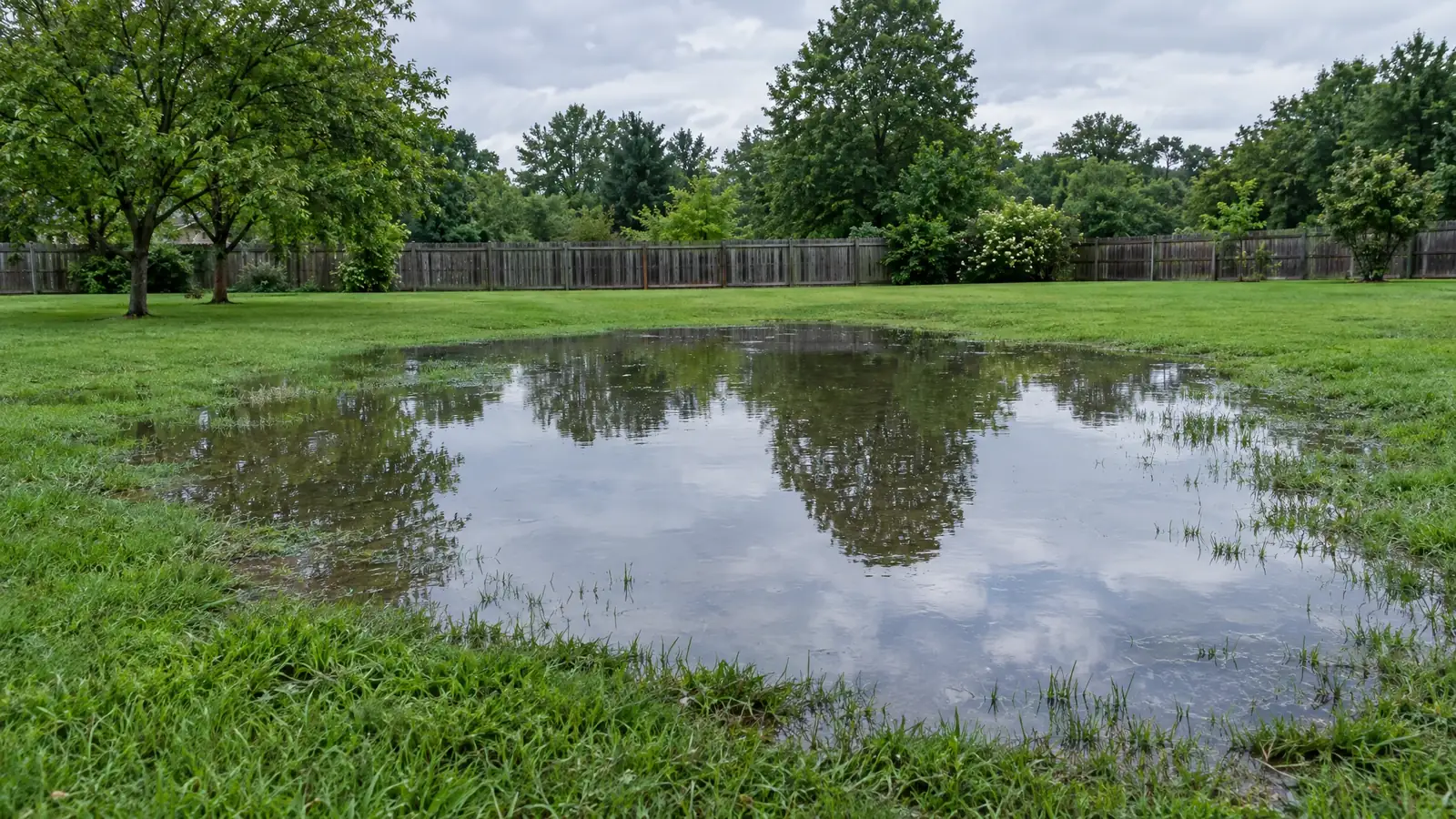
Key takeaways
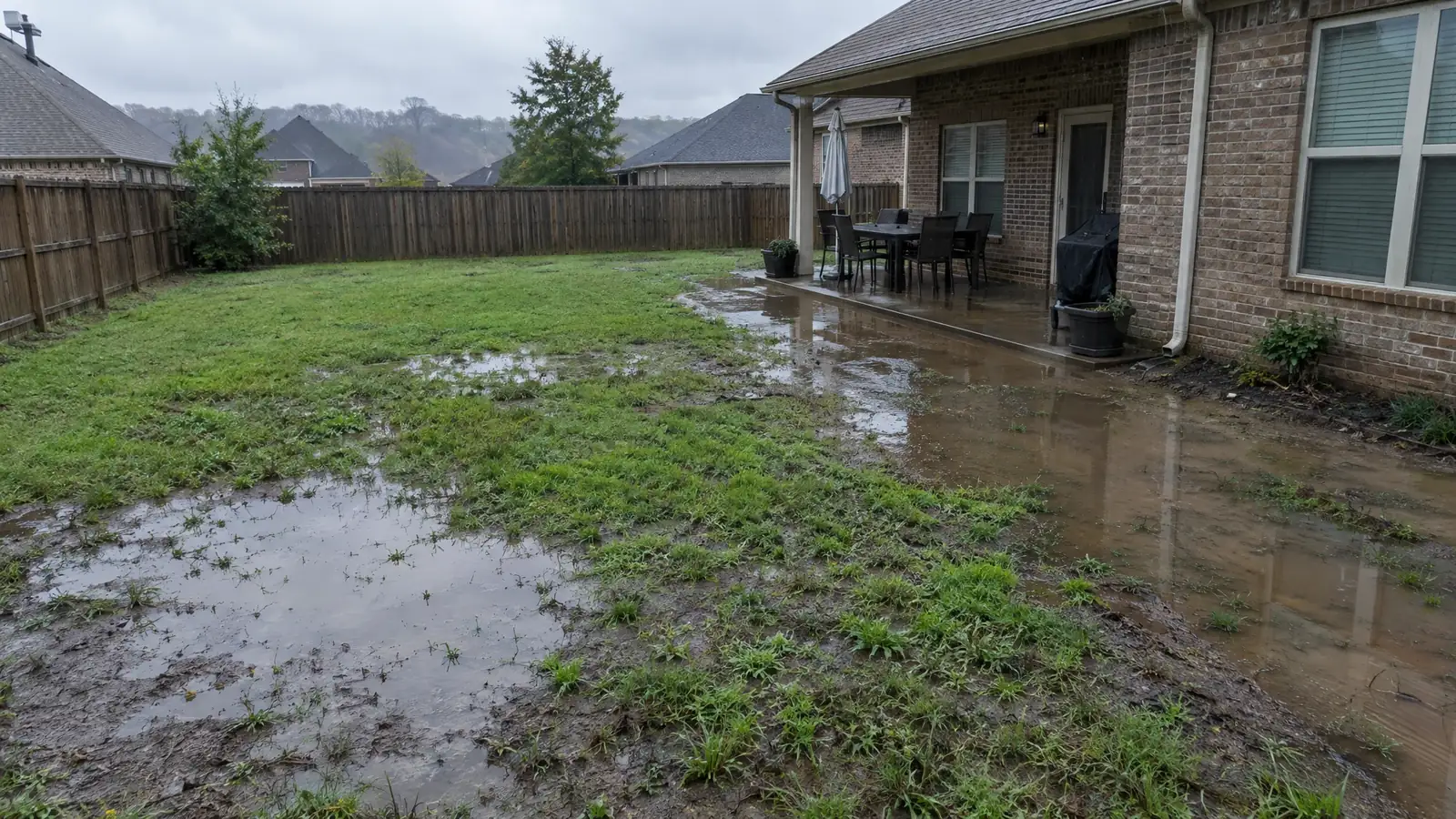
- Standing water always has a cause: slope, soil, roof water or groundwater
- Diagnosis comes before digging
- Small spots may need only grading; large areas need drains
- The outlet must be solved before the drain
Step 1: find where the water comes from
Watch the yard during rain. Is water arriving from a downspout, a slope above, a neighbor or rising from below after the rain stops? The answer points to the cure.
Step 2: find where it can go
Every drain needs an outlet. Look for a lower area, a ditch, a storm inlet or a spot where a dry well makes sense. If there is no outlet, the problem is bigger than the puddle.
Step 3: pick the fix
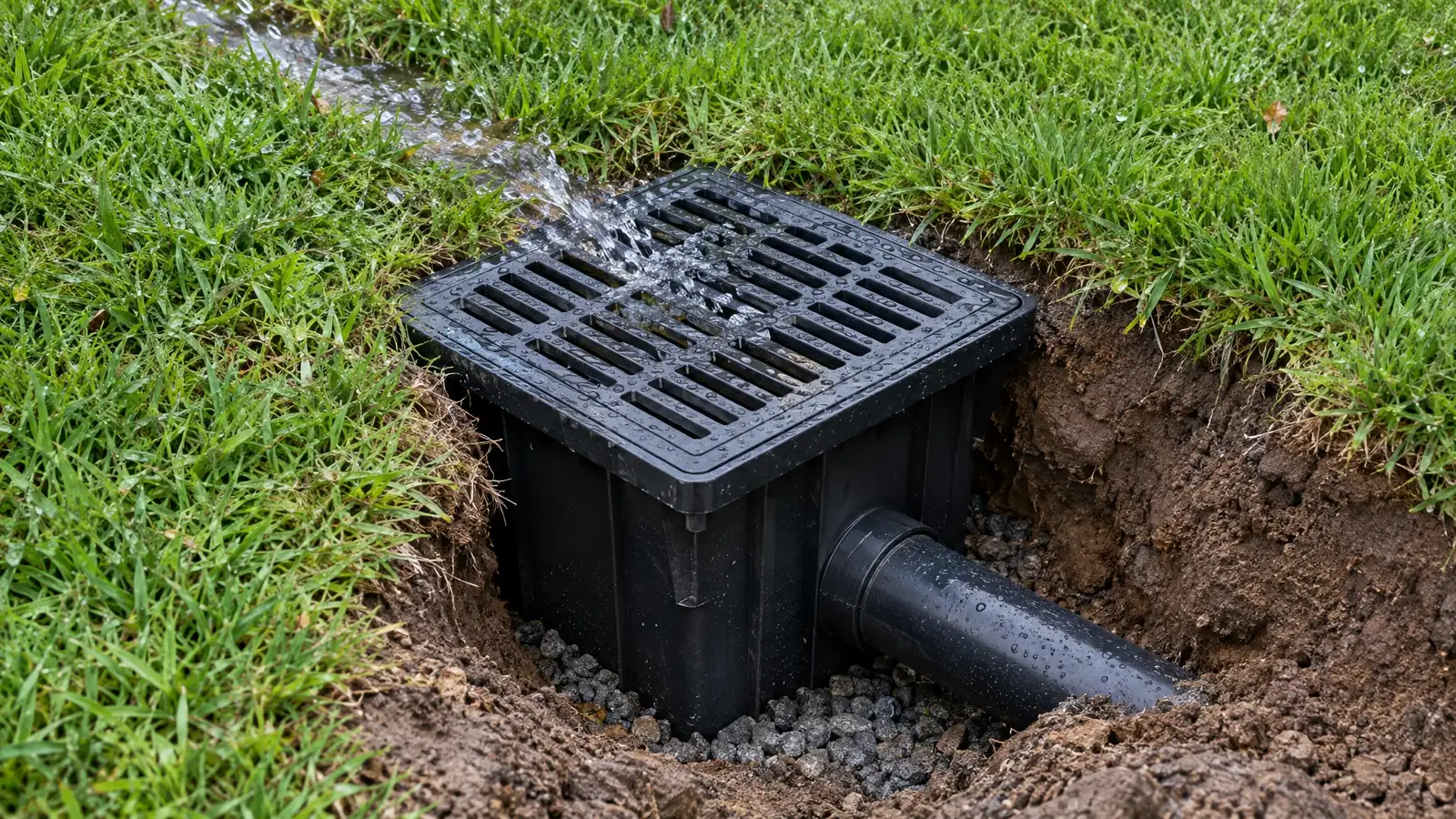
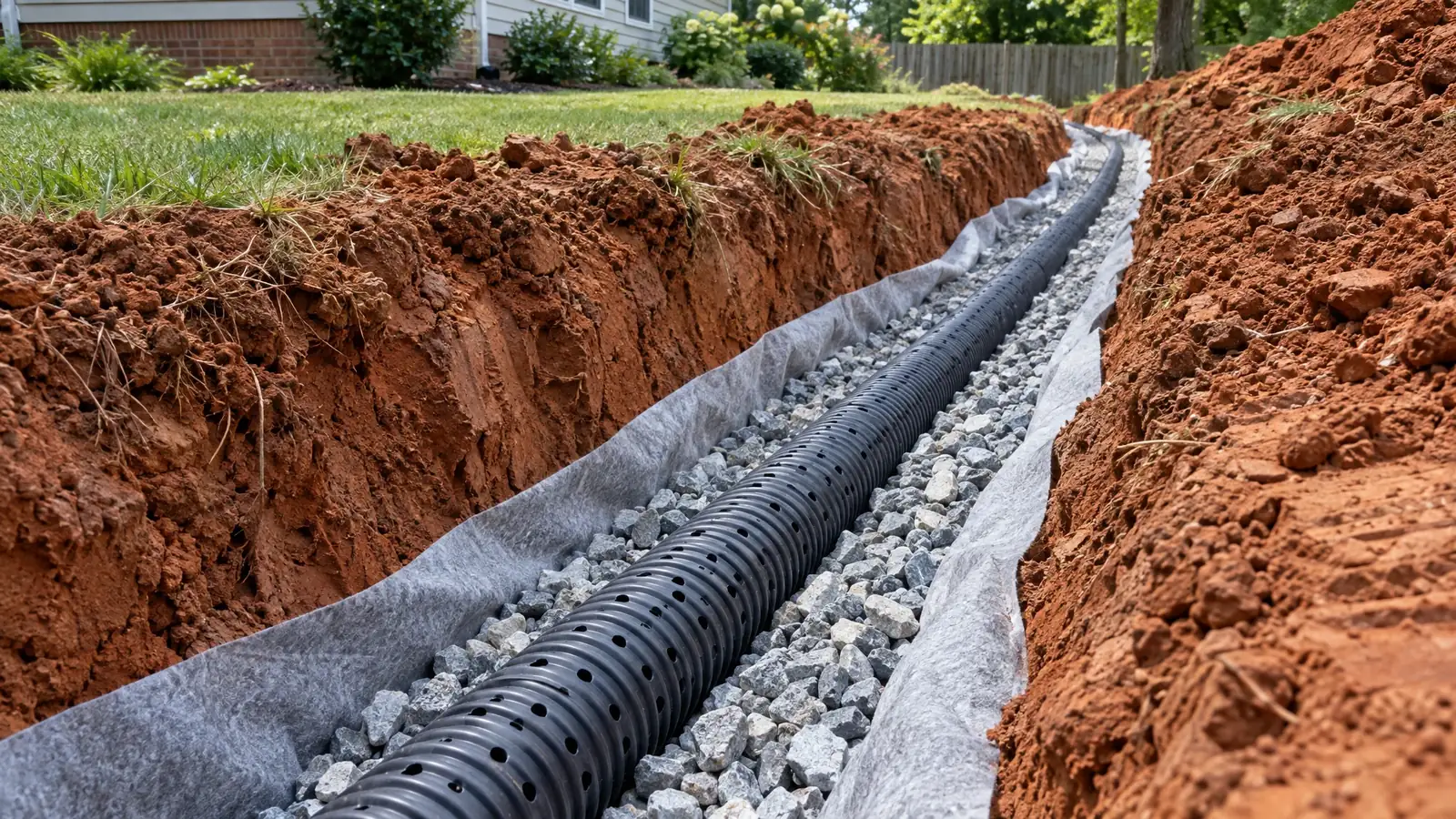
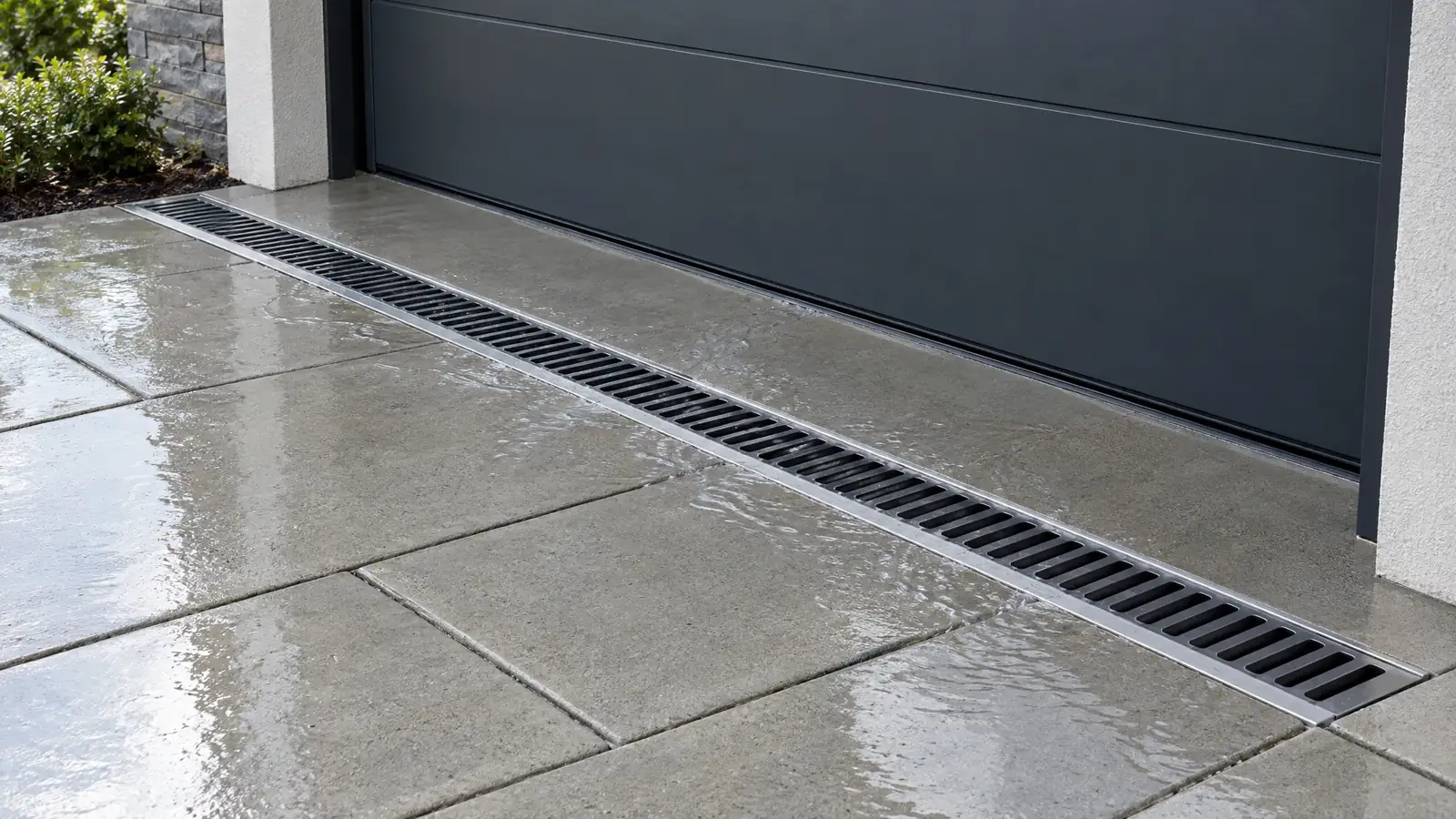
Downspout water: bury the line. Surface flow: swale, regrade or channel. A true low spot: catch basin and pipe. Wet strip along a slope: French drain. Several causes: combine.
Step 4: restore and maintain
Re-sod, re-seed and keep outlets clear. Check the system after the first few big rains.
When to call a pro
If water is near the foundation, if the area is large, if grades are tricky or if you are not sure of the cause, a site visit saves money by getting the diagnosis right the first time.
Quick answers
Will gravel in the hole fix a puddle?
Rarely. Without an outlet, a gravel-filled hole just becomes a gravel-filled puddle.
Can a rain garden help?
Yes, for modest runoff on soils that infiltrate. In clay, a rain garden needs an overflow path.
Want a professional opinion on your property?
We offer a free visit and a clear written plan. Call (615) 393-6985 or use the form below.