Key takeaways
- A French drain is a sloped trench with perforated pipe in clean gravel
- It collects subsurface and surface water and carries it to an outlet
- Slope and outlet matter more than almost anything else
- Filter fabric keeps soil out of the stone
The basic idea
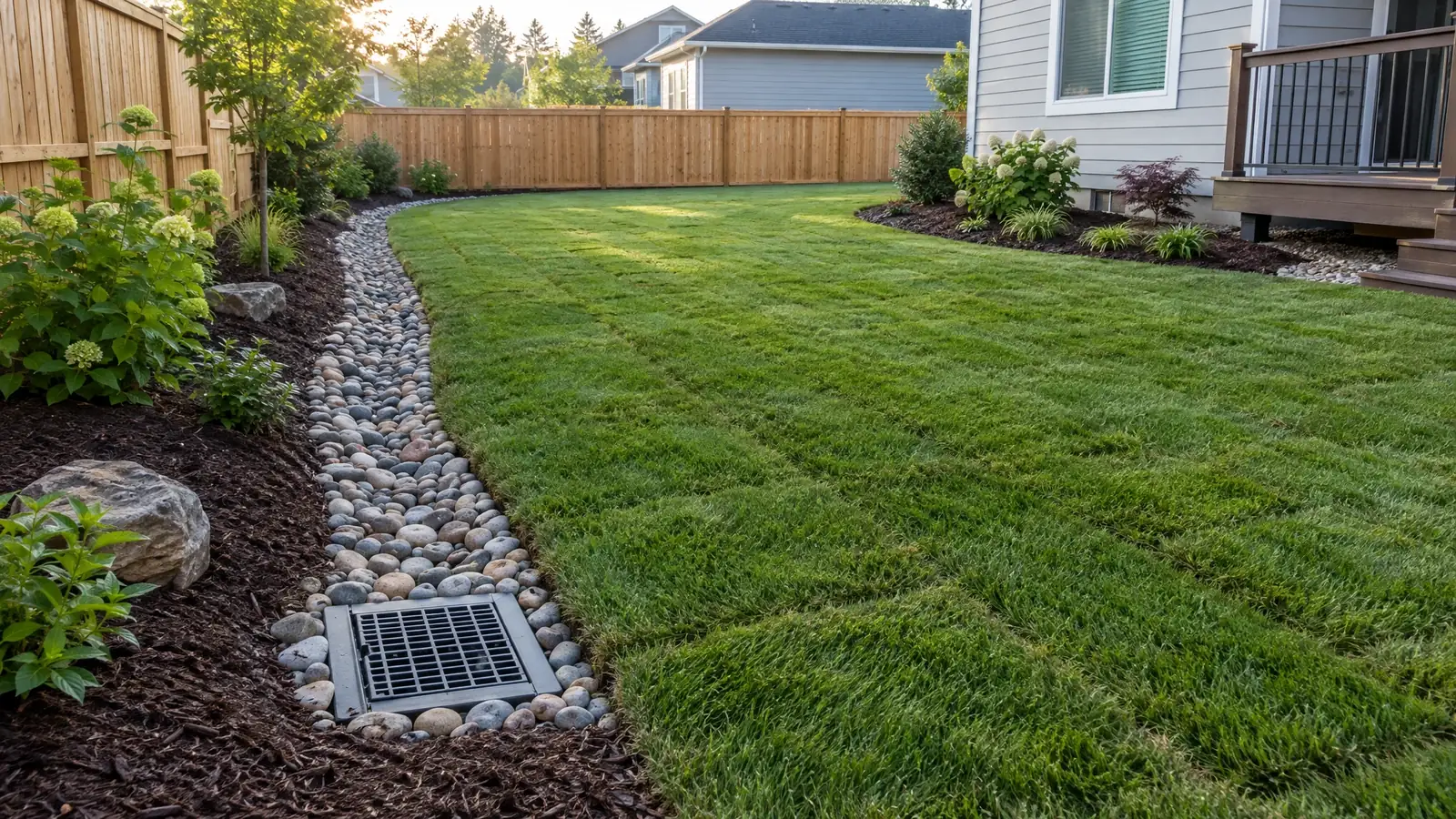
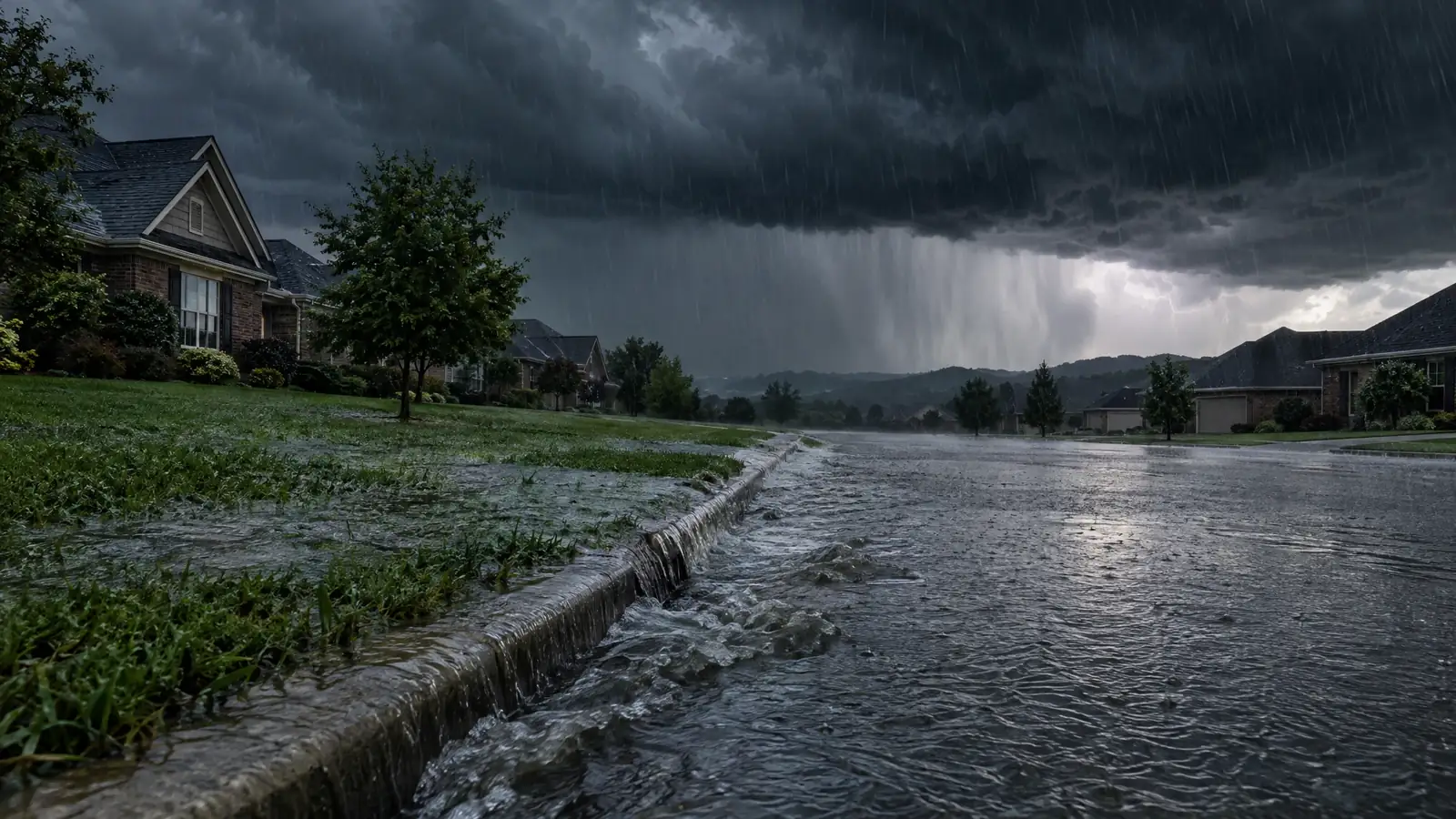
Water moves downhill and along the path of least resistance. A French drain gives it an easy underground path: a trench filled with clean stone is far more permeable than the soil around it, so water flows into the trench instead of staying in the ground.
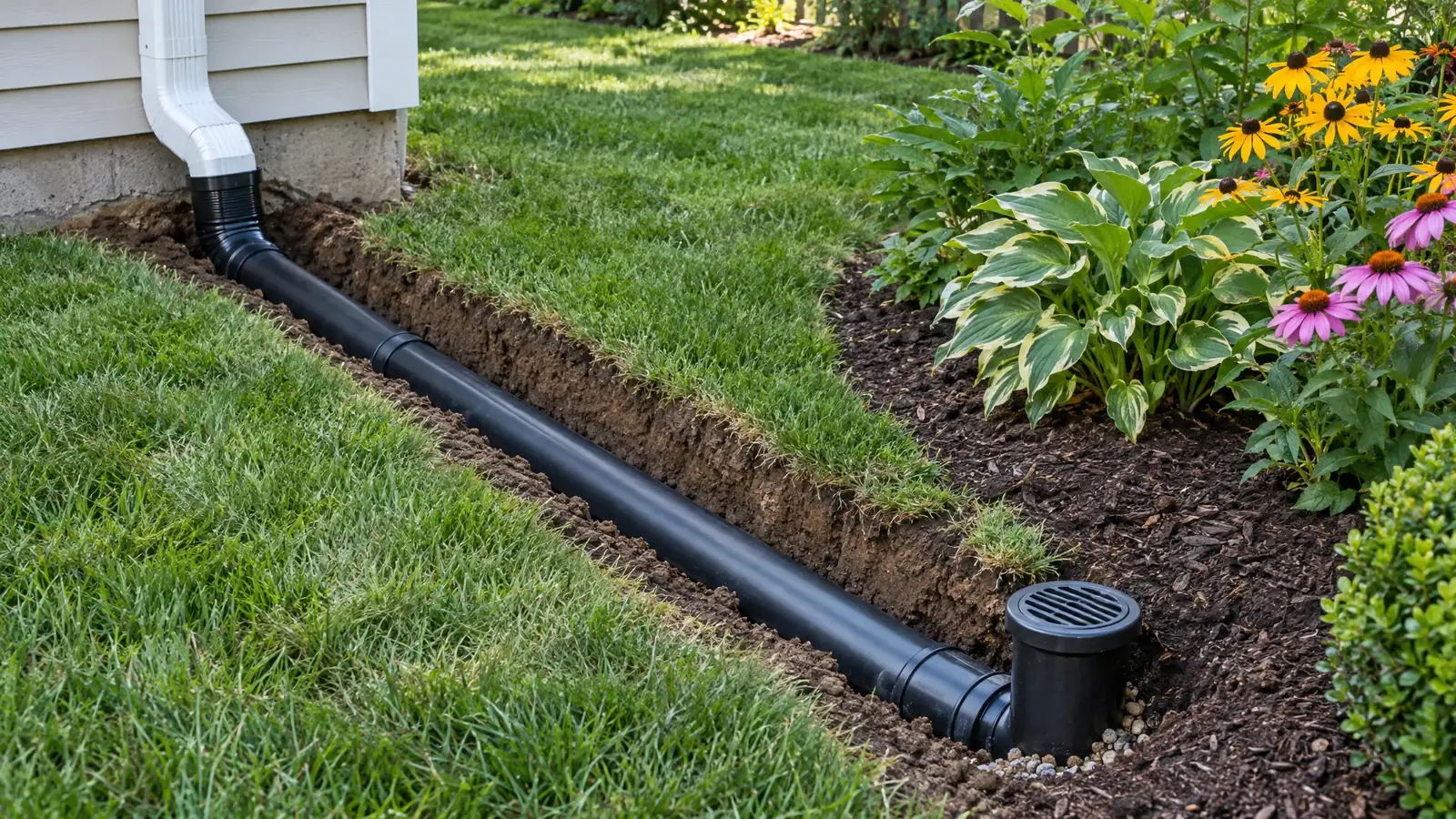
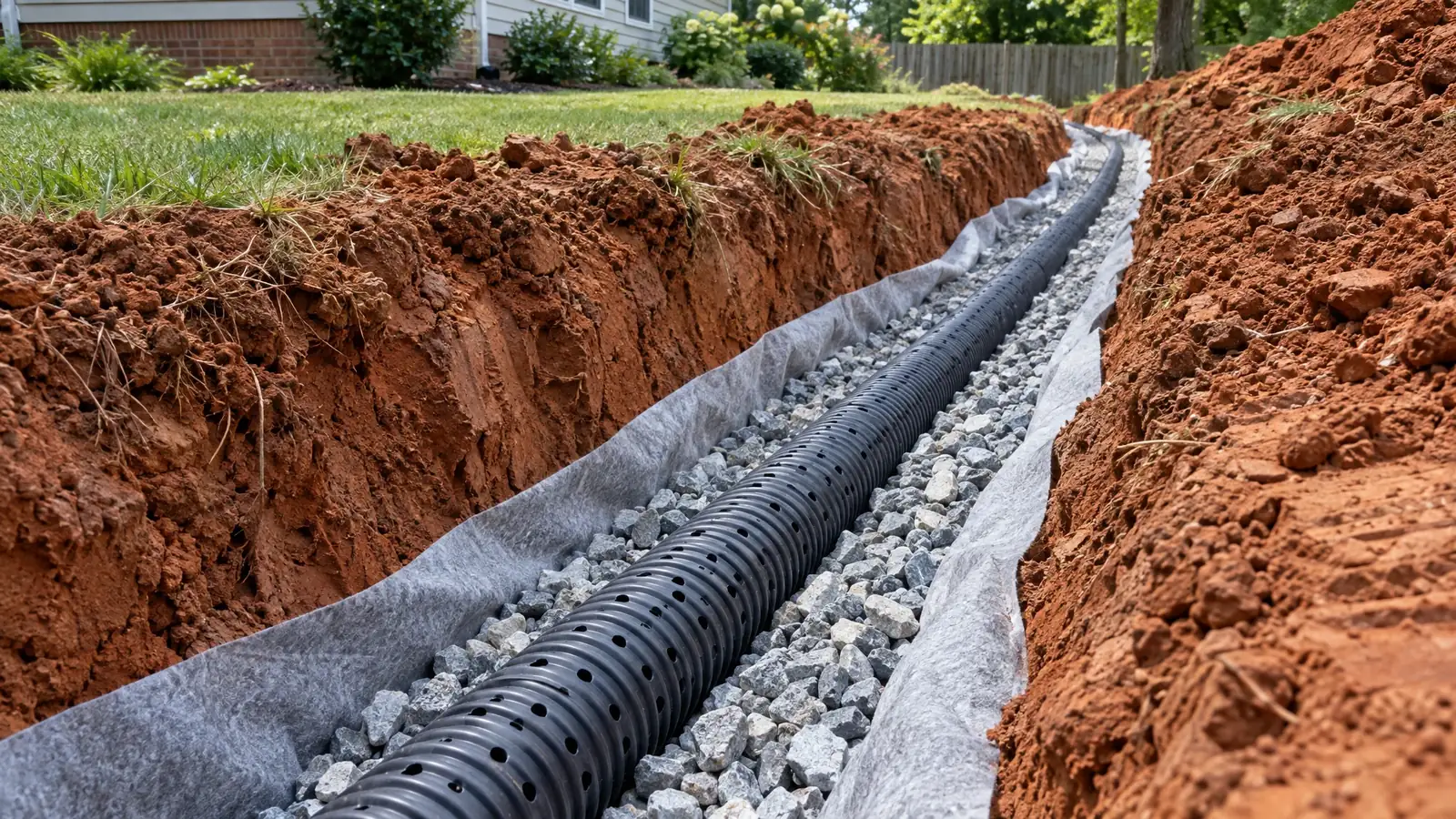
Inside the stone sits a perforated pipe that carries the collected water along the trench to a place where it can leave.
The parts
Filter fabric lines the trench so fine soil cannot migrate into the gravel and clog it over time. Washed gravel provides open voids for water. Perforated pipe, laid with the holes down or to the sides according to the manufacturer, moves water along a continuous slope.
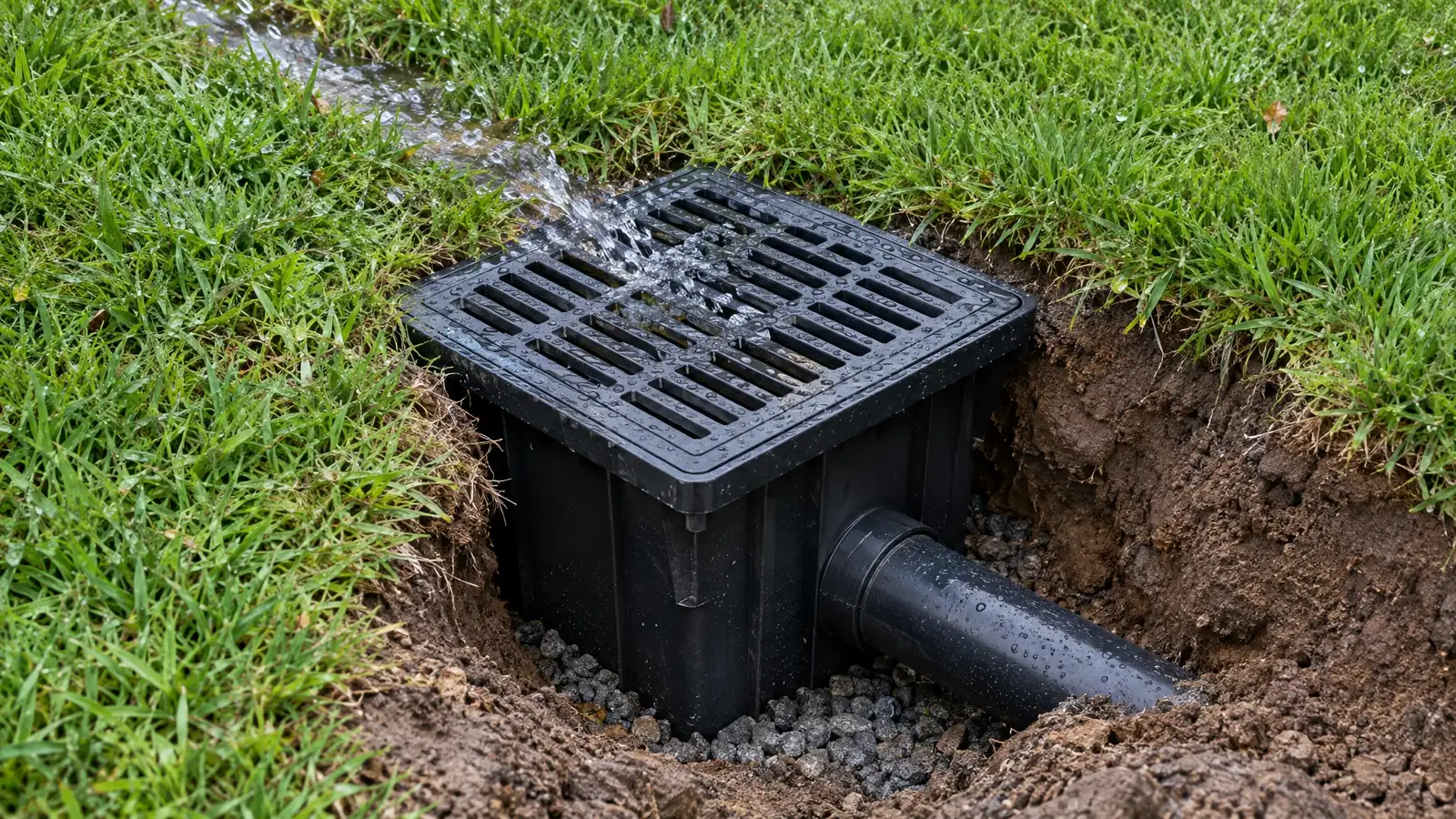
At the end, an outlet takes the water out: daylight on a slope, a catch basin, a dry well or a storm tie-in.
Why slope is everything
A French drain does not pump water; gravity does the work. If the pipe has no steady fall, water sits and silts. Even a modest, consistent slope along the trench is far better than steep sections and flat spots.
A common planning figure is about one percent fall, or one inch per ten feet, but the actual design depends on the site.
Where French drains fit
French drains are best at intercepting subsurface water and shallow groundwater, such as a wet strip at the base of a slope or along a foundation. For concentrated surface flow, a channel drain or catch basin is often the better first tool.
Why they fail
Most failures trace to silt from missing fabric, no outlet, wrong slope, or crushed pipe. A well-built drain can be kept healthy with cleanouts, which let it be flushed if it slows down.
Quick answers
Do French drains need maintenance?
They need little, but outlets should be kept clear of leaves and debris, and cleanouts allow flushing if flow slows.
Can a French drain be too deep?
Yes. Depth should match the water problem and the outlet elevation, not exceed them.
Want a professional opinion on your property?
We offer a free visit and a clear written plan. Call (615) 393-6985 or use the form below.