Key takeaways
- A downspout can deliver a huge volume of water in a storm
- Discharge should be as far from the house as possible
- Buried lines look cleaner and work better than splash blocks
- Never connect roof water to the sanitary sewer
Splash blocks and extensions
The simplest fix is a rigid extension that carries water several feet from the wall. It works if the ground slopes away, but it is a tripping hazard and often gets disconnected.
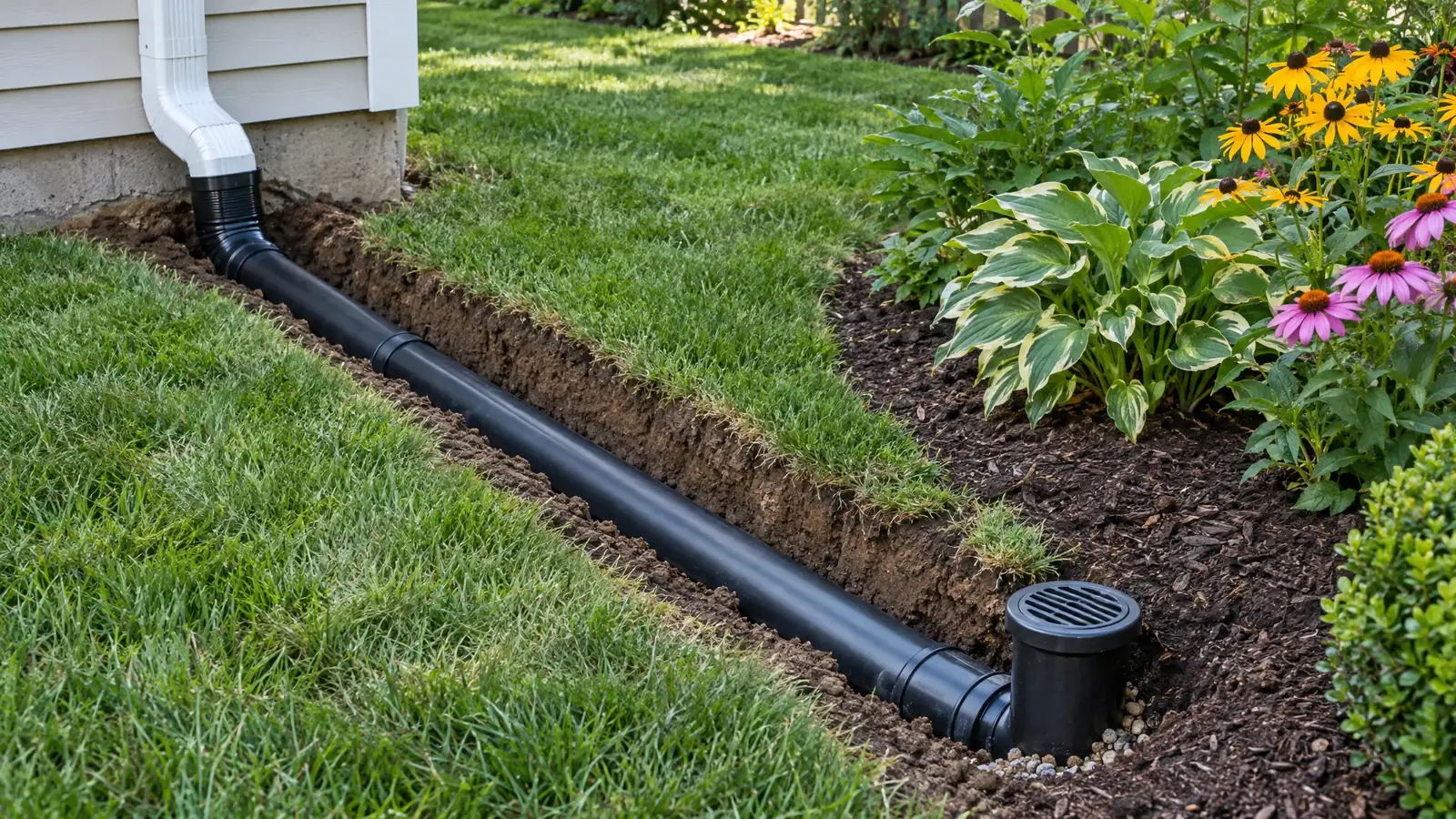
Buried solid pipe
A solid pipe buried at a steady slope runs the water to a pop-up emitter well away from the house. It is hidden, durable and can serve several downspouts.
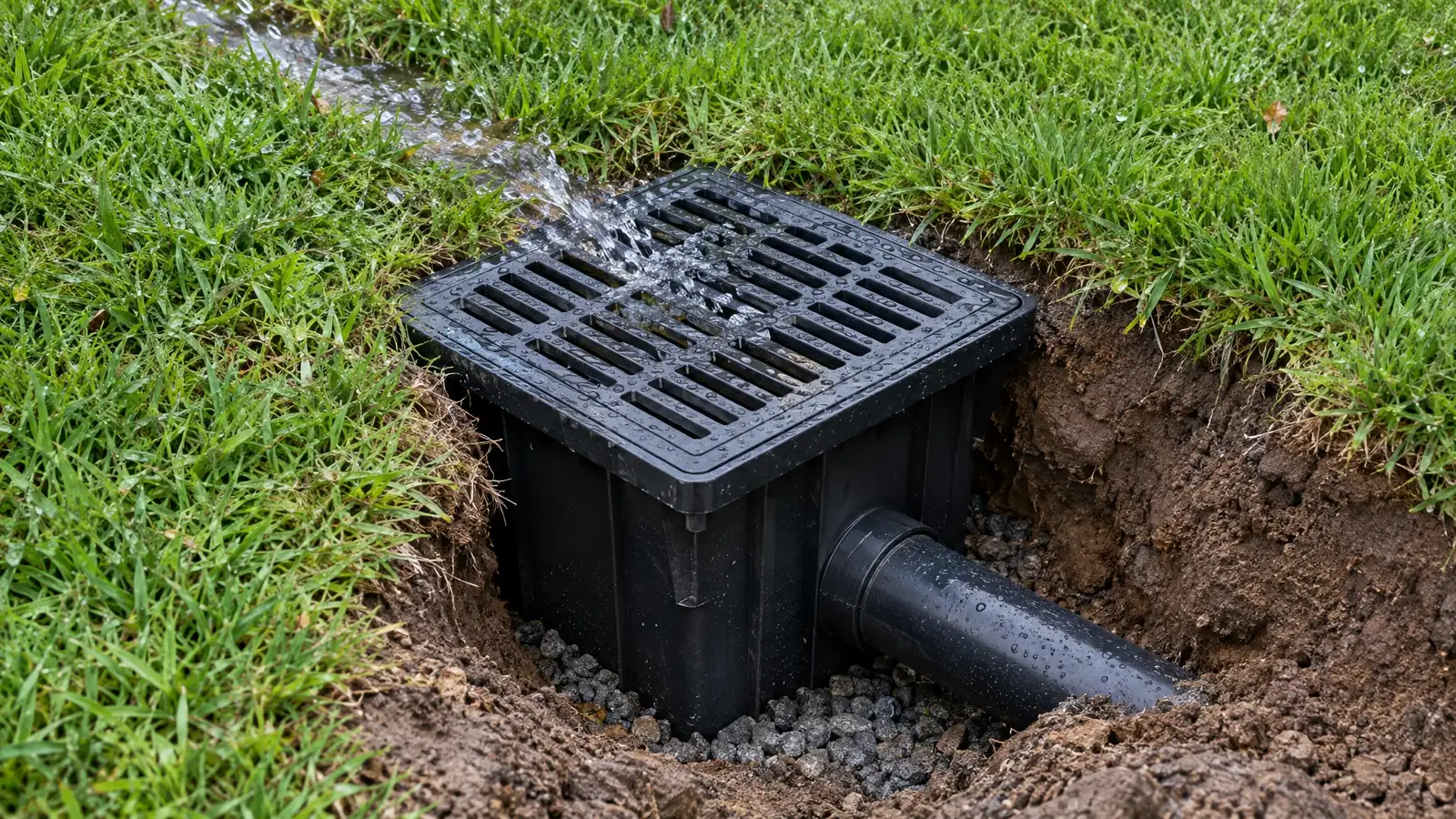
Pop-up emitters
An emitter is a cap that opens under flow and closes when dry. It keeps debris out and looks tidy in the lawn.
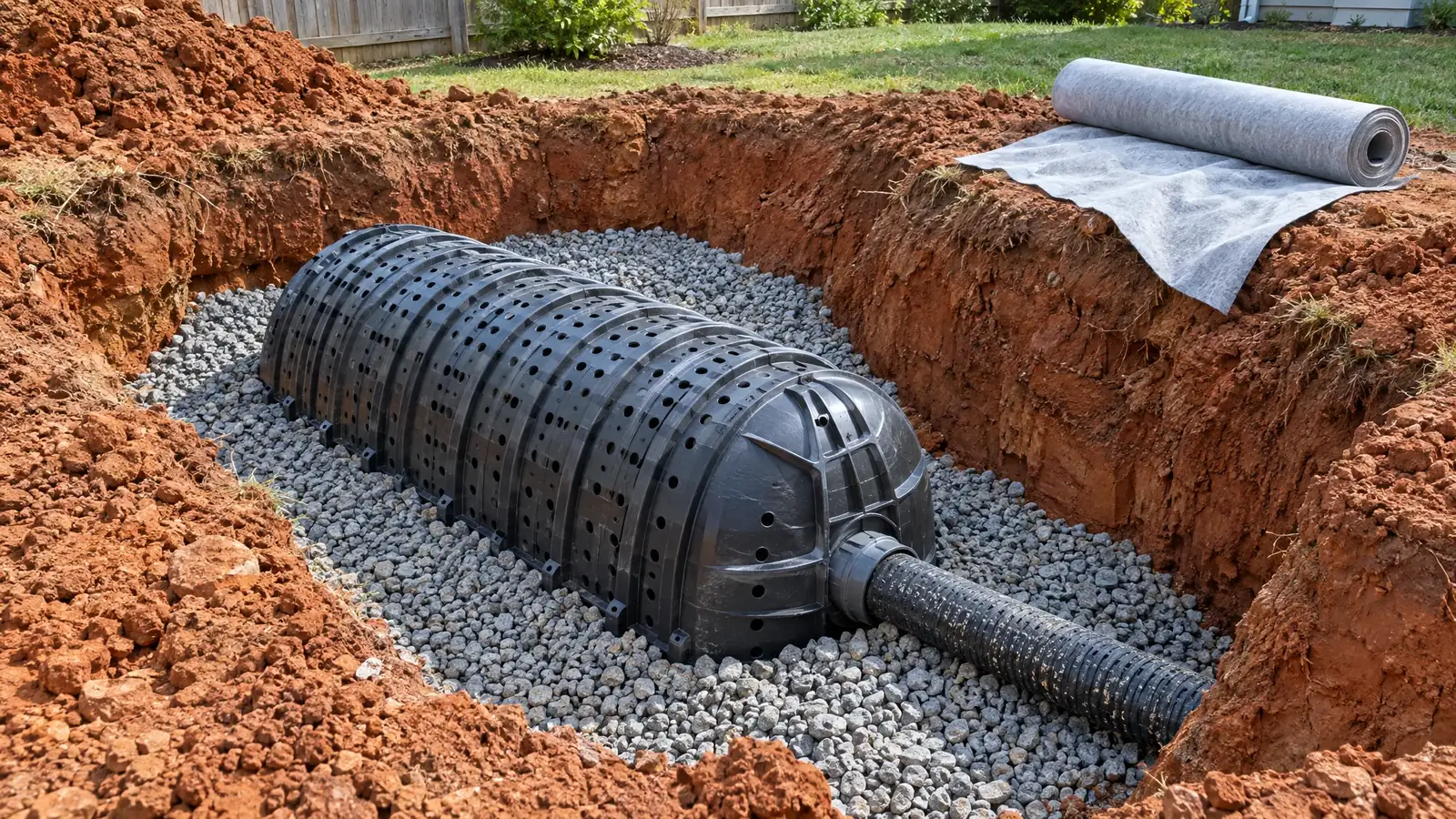
Dry wells and basins
Where a lot is flat or has no daylight outlet, the line can end in a dry well or tie into a catch basin system.
Gutter basics
Clean gutters and properly sized downspouts keep water in the system. Overflowing gutters dump water at the foundation no matter how good the line is.
Quick answers
How far from the house should a downspout discharge?
As far as the lot allows, commonly at least five to ten feet.
Can two downspouts share one pipe?
Often yes, if the pipe is sized for the combined flow.
Want a professional opinion on your property?
We offer a free visit and a clear written plan. Call (615) 393-6985 or use the form below.